Get Quote
Get Quick QuoteService Areas
Miami, Coral Gables, Kendall, Doral, Hialeah, Aventura, Homestead
Availability
Mon-Sat: 8am-6pm
Sun: 9am-3pm
# 19th-Century Sewage & Public Health Impacts
In the 19th century, cesspits contributed to significant public health problems, including the spread of waterborne diseases like cholera and typhoid in densely populated urban areas. Before modern sewer systems, cesspits were the primary method of waste disposal in cities, but their inadequate design and maintenance led to groundwater contamination, disease transmission, and widespread public health crises.
What it is and why it matters
Cesspits are underground pits or tanks that collect human waste and wastewater. In the 19th century, they were commonly used in urban areas before municipal sewer systems existed. Unlike modern septic systems with proper treatment and drainage, cesspits simply stored waste until they were manually emptied, often overflowing or leaking into surrounding soil and groundwater.
The World Health Organization (WHO) documents how inadequate sanitation infrastructure, including cesspits, contributed to major public health crises in the 1800s. The Centers for Disease Control and Prevention (CDC) historical records show that waterborne diseases like cholera and typhoid fever spread rapidly in cities where cesspits contaminated drinking water sources.
Understanding this history is important because it demonstrates why modern wastewater treatment and septic system maintenance are critical for public health. The problems caused by 19th-century cesspits led to the development of modern sanitation systems that protect communities today.
Need help today?
Same-day service across Miami-Dade County. Licensed & insured.
Call Miami Septic ProsTechnical breakdown
Cesspit design and limitations: 19th-century cesspits were typically simple pits dug into the ground, often lined with brick or stone but frequently unlined. They had no treatment mechanisms, no drainage systems, and no overflow protection. As waste accumulated, cesspits would overflow during heavy rains or when full, releasing raw sewage into streets, yards, and nearby water sources.
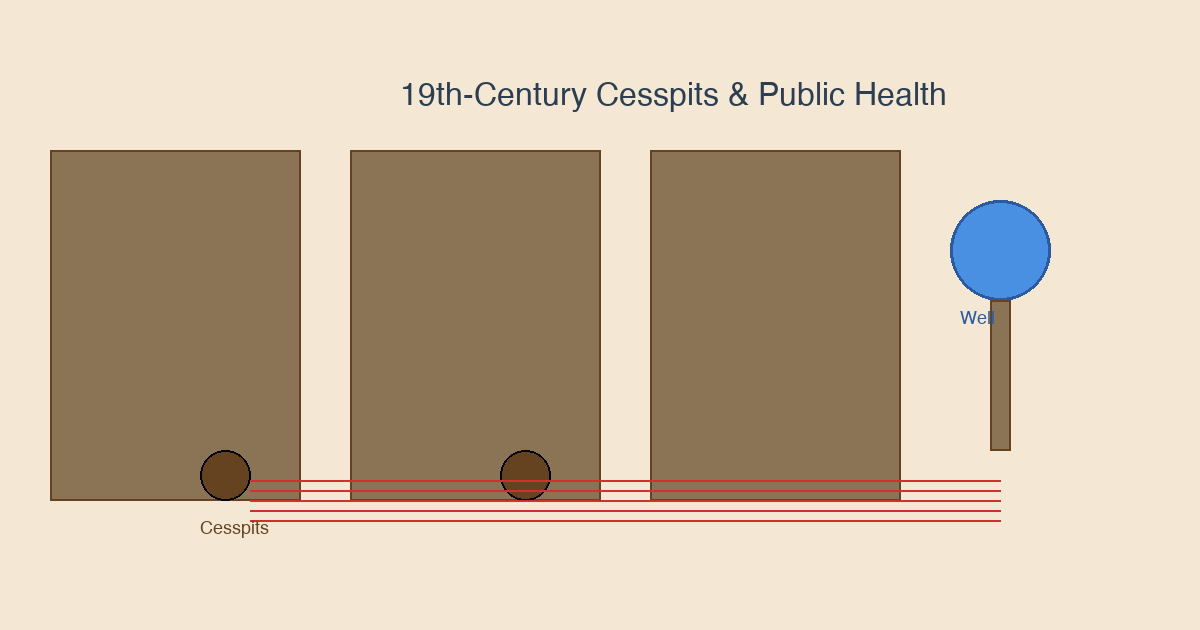
Groundwater contamination: Cesspits were often located near wells and water sources. When cesspits leaked or overflowed, pathogens from human waste entered groundwater, contaminating drinking water supplies. The EPA's historical documentation explains how this contamination led to widespread disease outbreaks in cities before modern water treatment existed.
Disease transmission: Cholera and typhoid fever are waterborne diseases caused by bacteria (Vibrio cholerae and Salmonella typhi) found in human waste. When cesspit contents contaminated drinking water, these pathogens spread rapidly through communities. The National Library of Medicine archives contain extensive research documenting how 19th-century cesspit use directly contributed to cholera and typhoid epidemics in urban areas.
Urban density and public health: In densely populated 19th-century cities, cesspits were often located close together, creating concentrated contamination zones. During disease outbreaks, the proximity of cesspits to homes, wells, and public spaces accelerated disease transmission, making cesspits a significant factor in public health crises.
South Florida notes (local relevance)
While Miami-Dade County's modern septic system regulations prevent the problems associated with historical cesspits, understanding this history highlights the importance of proper wastewater management. Modern septic systems in Miami-Dade must meet strict Florida Department of Health requirements for design, installation, and maintenance to prevent groundwater contamination.
The county's high water table and sandy soils make proper septic system maintenance especially critical. Regular septic tank pumping prevents overflow and protects groundwater quality, ensuring that modern systems never cause the public health problems associated with 19th-century cesspits.
Miami-Dade County DERM enforces strict regulations on septic system installation and maintenance to prevent contamination of the Biscayne Aquifer, the primary drinking water source for the region. These modern protections ensure that wastewater is properly treated and disposed of, preventing the waterborne disease outbreaks that plagued 19th-century cities.
Get a clear, no-pressure quote
Describe your job. We'll confirm price and schedule.
Get My Free Quote