Get Quote
Get Quick QuoteService Areas
Miami, Coral Gables, Kendall, Doral, Hialeah, Aventura, Homestead
Availability
Mon-Sat: 8am-6pm
Sun: 9am-3pm
# 30 m Setback Guidance
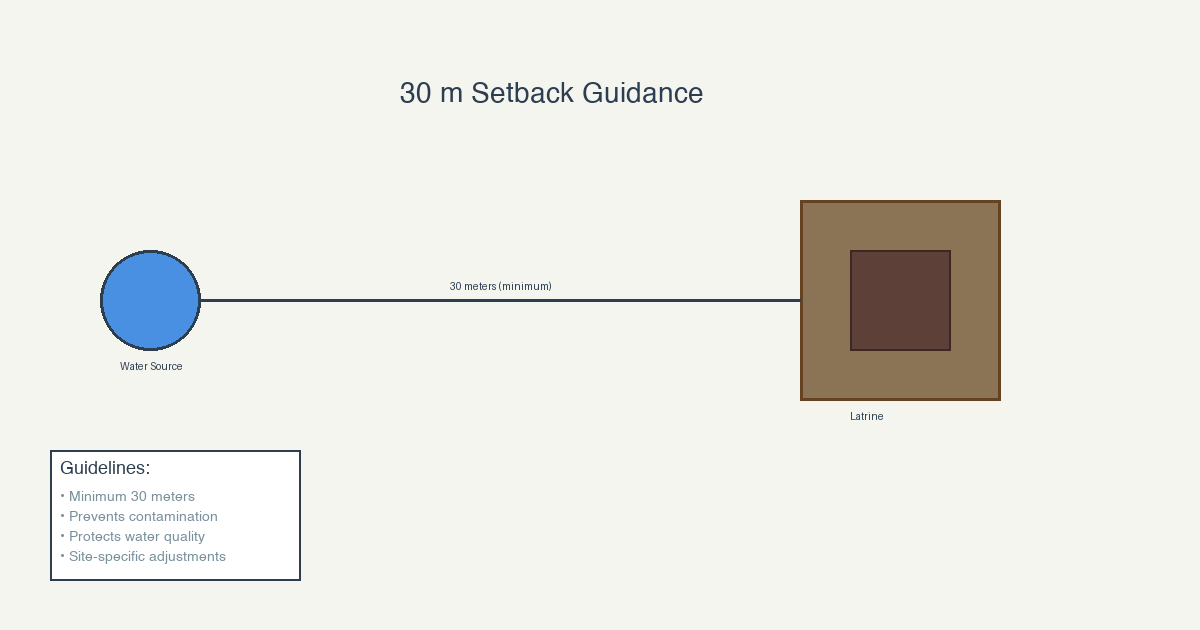
30 m setback guidance recommends that latrines should be located at least 30 meters away from water sources to prevent contamination and protect public health. This minimum distance helps ensure that pathogens and contaminants from latrines do not reach water sources, protecting drinking water quality and public health.
What it is and why it matters
30 m setback guidance is a minimum distance requirement that latrines should be located at least 30 meters (approximately 100 feet) away from water sources such as wells, springs, rivers, lakes, and other water bodies. This distance helps prevent contamination of water sources by pathogens and other contaminants that may leach from latrines through soil and groundwater.
The World Health Organization (WHO) Sanitation and Hygiene Guidelines recommend the 30-meter minimum distance as a best-practice standard for latrine siting. The Centers for Disease Control and Prevention (CDC) explains that proper setback distances are essential for protecting water sources and preventing waterborne diseases.
Understanding 30 m setback guidance is important for ensuring safe latrine siting and protecting water quality. While modern septic systems in Miami-Dade County follow strict setback requirements, understanding latrine setback guidance helps ensure safe sanitation in any context.
Need help today?
Same-day service across Miami-Dade County. Licensed & insured.
Call Miami Septic ProsTechnical breakdown
Minimum distance requirement: The 30-meter minimum distance is based on research showing that pathogens and contaminants can travel through soil and groundwater from latrines to water sources. The WHO recommends this distance as a minimum standard, with greater distances preferred when possible, especially in areas with high groundwater levels or porous soils.
Contamination prevention: The setback distance helps prevent contamination by allowing natural filtration and die-off of pathogens as they travel through soil. The CDC explains that soil acts as a natural filter, removing or reducing pathogens over distance, but adequate distance is essential for effective protection.
Site-specific considerations: Actual setback distances may need to be adjusted based on local conditions including soil type, groundwater depth, slope, and direction of groundwater flow. The University of Florida IFAS Extension explains that site-specific factors should be considered when determining appropriate setback distances.
Water source types: Different water sources may require different setback considerations. Wells typically require the most protection, while surface water sources may need additional consideration for runoff. The EPA provides guidance on setback requirements for different water source types.
Groundwater protection: In areas with high groundwater levels or shallow aquifers, greater setback distances may be necessary to protect groundwater quality. The WHO recommends considering local hydrogeological conditions when determining setback distances.
Regulatory compliance: Many jurisdictions have regulations requiring minimum setback distances for latrines and other sanitation facilities. The CDC explains that following setback requirements is essential for regulatory compliance and public health protection.
South Florida notes (local relevance)
Miami-Dade County's high water table and sandy soils make setback distances especially important for protecting groundwater quality. The county's septic system regulations include strict setback requirements that exceed the 30-meter minimum for modern systems, but understanding latrine setback guidance helps ensure safe sanitation in any context.
The county's septic system services ensure proper maintenance of modern systems that provide better protection than traditional latrines. Professional septic system installation follows strict setback requirements that protect the county's groundwater resources.
The Florida Department of Health provides guidance on setback requirements that emphasize the importance of protecting water sources, especially in areas with high groundwater levels like Miami-Dade County.
Get a clear, no-pressure quote
Describe your job. We'll confirm price and schedule.
Get My Free Quote