Get Quote
Get Quick QuoteService Areas
Miami, Coral Gables, Kendall, Doral, Hialeah, Aventura, Homestead
Availability
Mon-Sat: 8am-6pm
Sun: 9am-3pm
# Best-Practice Latrine Construction
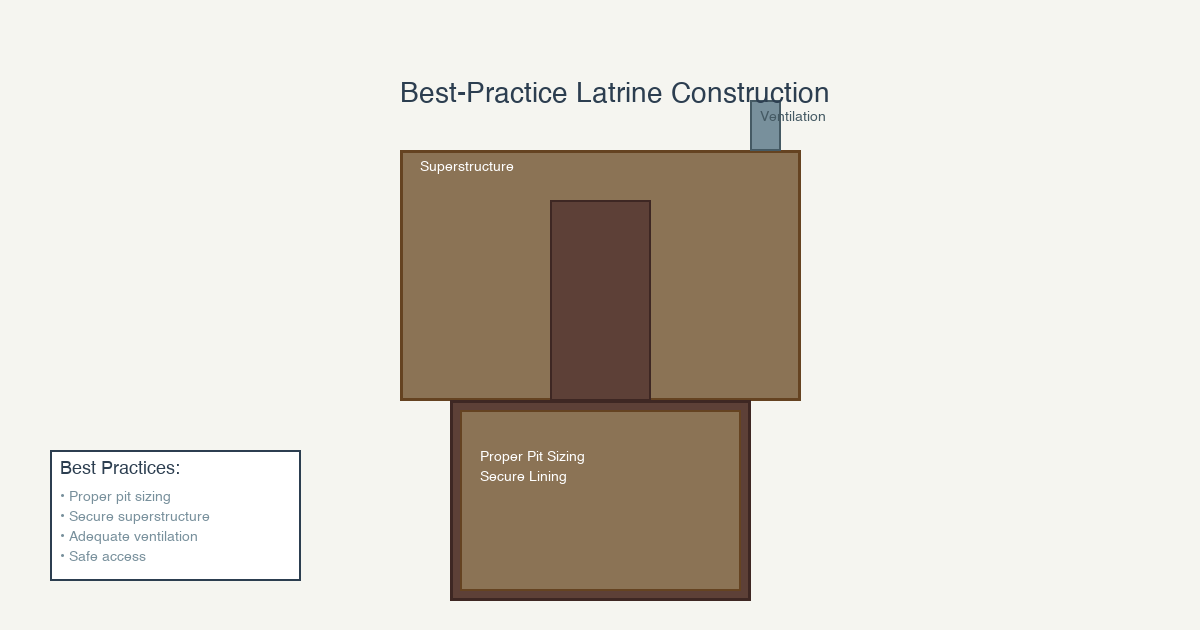
Best-practice latrine construction includes proper pit sizing, secure superstructure, ventilation, and safe access, following WHO and health department guidelines for safe sanitation. These construction standards ensure latrines provide effective, safe, and hygienic sanitation while protecting public health and the environment.
What it is and why it matters
Best-practice latrine construction follows established guidelines for safe, effective, and hygienic sanitation facilities. Key components include proper pit sizing based on expected use, secure superstructure for privacy and protection, adequate ventilation for odor control, and safe access for users. These standards ensure latrines function properly and protect public health.
The World Health Organization (WHO) Sanitation and Hygiene Guidelines provide comprehensive best-practice latrine construction standards. The Centers for Disease Control and Prevention (CDC) explains that proper construction is essential for effective sanitation and disease prevention.
Understanding best-practice latrine construction is important for ensuring safe sanitation facilities. While modern septic systems are standard in Miami-Dade County, understanding latrine construction best practices helps ensure safe sanitation in any context.
Need help today?
Same-day service across Miami-Dade County. Licensed & insured.
Call Miami Septic ProsTechnical breakdown
Proper pit sizing: Pit size should be based on expected use, number of users, and soil conditions. The WHO recommends pit dimensions that provide adequate capacity while ensuring structural stability. Pit depth should consider groundwater levels and soil stability, with typical depths ranging from 1.5 to 3 meters depending on conditions.
Secure superstructure: The superstructure (above-ground structure) should provide privacy, protection from weather, and structural stability. Best-practice designs include sturdy construction materials, proper door and ventilation openings, and secure foundation. The CDC explains that superstructure design affects user comfort, safety, and facility longevity.
Ventilation: Adequate ventilation is essential for odor control and air quality. Best-practice designs include ventilation pipes or openings that allow air circulation while preventing fly entry. The University of Florida IFAS Extension explains that proper ventilation improves user comfort and reduces odors.
Safe access: Safe access includes appropriate door design, non-slip surfaces, adequate lighting, and clear pathways. The WHO recommends access designs that accommodate all users, including those with disabilities, and provide safety features to prevent accidents.
Construction materials: Best-practice construction uses durable, locally available materials appropriate for the environment. Common materials include concrete, brick, wood, or metal for superstructures, and appropriate materials for pit linings based on soil conditions. The EPA provides guidance on material selection for different conditions.
Site selection: Proper site selection considers distance from water sources, soil conditions, groundwater levels, and accessibility. The WHO recommends minimum distances from water sources (typically 30 meters) and consideration of local conditions when selecting latrine locations.
South Florida notes (local relevance)
While pit latrines are uncommon in Miami-Dade County due to modern septic system infrastructure, understanding best-practice construction is important for any temporary or emergency sanitation facilities. The county's high water table and sandy soils require special consideration in latrine construction.
Miami-Dade County's septic system regulations ensure properties have proper wastewater treatment, but understanding latrine construction best practices helps ensure safe sanitation in any context. Professional septic system services ensure proper maintenance of modern systems that provide better sanitation than pit latrines.
The county's public health focus means that any sanitation facilities should follow best-practice construction standards. The Florida Department of Health provides guidance on sanitation standards that emphasize proper construction methods.
Get a clear, no-pressure quote
Describe your job. We'll confirm price and schedule.
Get My Free Quote