Get Quote
Get Quick QuoteService Areas
Miami, Coral Gables, Kendall, Doral, Hialeah, Aventura, Homestead
Availability
Mon-Sat: 8am-6pm
Sun: 9am-3pm
# Modern Soil Observation for Leach Field Sizing
Modern septic design relies on soil observation pits and percolation tests to size the leach field and ensure adequate infiltration capacity. These methods evaluate soil texture, structure, depth to seasonal high water table, and percolation rates to determine the correct drainfield dimensions for your property.
What it is and why it matters
Soil observation involves digging test pits or observation holes to examine soil horizons, texture, color, and structure. Engineers use this information alongside percolation (perc) tests that measure how quickly water infiltrates the soil. Together, these methods determine the leach field size needed to handle your home's wastewater volume while protecting groundwater quality.
The EPA Onsite Wastewater Treatment Systems Manual explains that soil observation and percolation testing are standard requirements for all new septic system installations. The University of Florida IFAS Extension confirms that modern design methods use soil morphology data to size drainfields appropriately, ensuring systems function properly for decades.
Without proper soil evaluation, drainfields may be undersized (causing backups and premature failure) or oversized (wasting money and land). In Miami-Dade County's sandy soils and high water table conditions, accurate sizing is especially critical to prevent groundwater contamination and system failures.
Need help today?
Same-day service across Miami-Dade County. Licensed & insured.
Call Miami Septic ProsTechnical breakdown
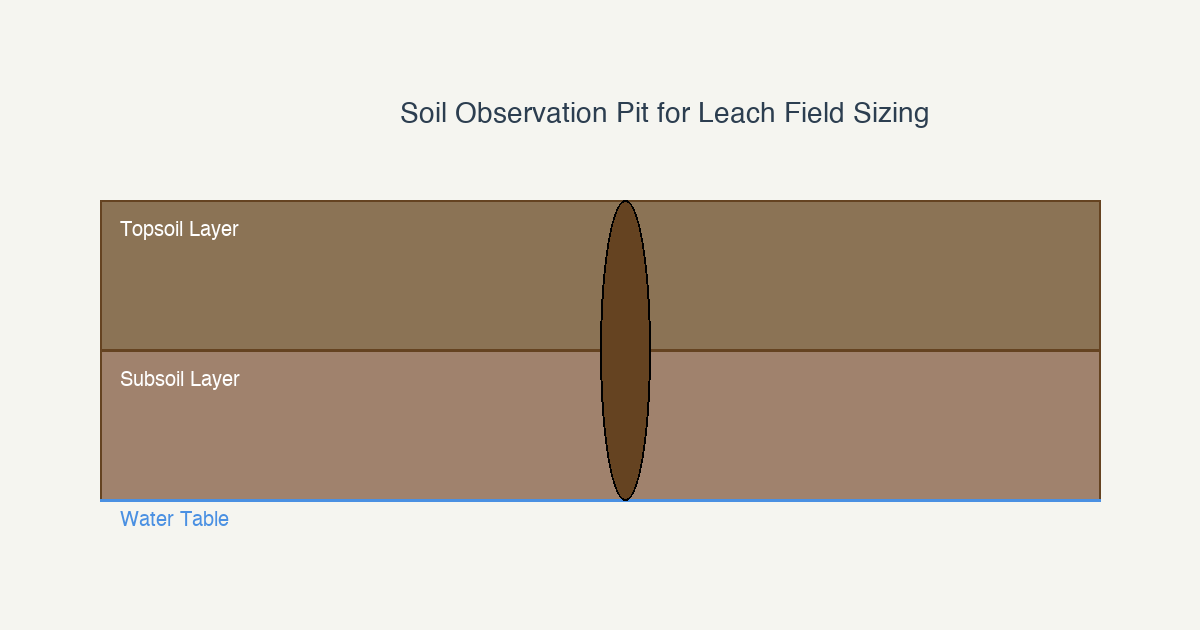
Soil observation pits are typically dug 3-5 feet deep, allowing engineers to examine soil horizons, identify restrictive layers, and measure depth to seasonal high water table. Engineers document soil texture (sand, loam, clay), structure (granular, blocky, massive), and color, which indicate drainage capacity and suitability for wastewater absorption.
Percolation tests measure the rate at which water infiltrates soil. A test hole is dug, filled with water, and the drop in water level is measured over time. The percolation rate (minutes per inch) determines the required drainfield size—faster percolation means smaller drainfields are needed, while slow percolation requires larger absorption areas.
The Florida Department of Health requires both soil observation and percolation testing for all new installations. Test results are used to calculate drainfield dimensions based on daily wastewater flow, soil percolation rate, and local regulations. The National Environmental Services Center explains that modern methods combine soil morphology data with percolation rates to ensure accurate sizing.
Design calculations use percolation rates and soil characteristics to determine the square footage of drainfield needed. Sandy soils with fast percolation may require 100-200 square feet per bedroom, while clay soils with slow percolation may need 300-500 square feet per bedroom or more.
South Florida notes (local relevance)
Miami-Dade County's sandy soils generally have good percolation rates, but the high water table creates unique challenges. The Miami-Dade County DERM requires soil observation to measure depth to seasonal high water table, which must be at least 24 inches below the bottom of the drainfield. During the rainy season (June-September), the water table rises, so engineers must account for seasonal fluctuations when sizing systems.
DERM also requires percolation testing during the wet season to ensure accurate results. Sandy soils in Miami-Dade typically have percolation rates of 1-5 minutes per inch, allowing for relatively compact drainfield designs. However, areas with shallow water tables or restrictive layers may require drainfield installation modifications or alternative systems.
The county's coastal location means many properties have very shallow water tables, requiring careful soil evaluation and sometimes advanced treatment unit installation instead of conventional drainfields. Professional septic system design services ensure proper evaluation and sizing for Miami-Dade's unique conditions.
Get a clear, no-pressure quote
Describe your job. We'll confirm price and schedule.
Get My Free Quote