Get Quote
Get Quick QuoteService Areas
Miami, Coral Gables, Kendall, Doral, Hialeah, Aventura, Homestead
Availability
Mon-Sat: 8am-6pm
Sun: 9am-3pm
# Neighborhood vs On-site Scale
Decentralized wastewater systems can operate at neighborhood scale (serving multiple properties) or on-site scale (serving individual properties), with scale selection depending on site conditions, density, and cost considerations. Understanding the differences between these scales helps determine the most appropriate approach for different situations.
What it is and why it matters
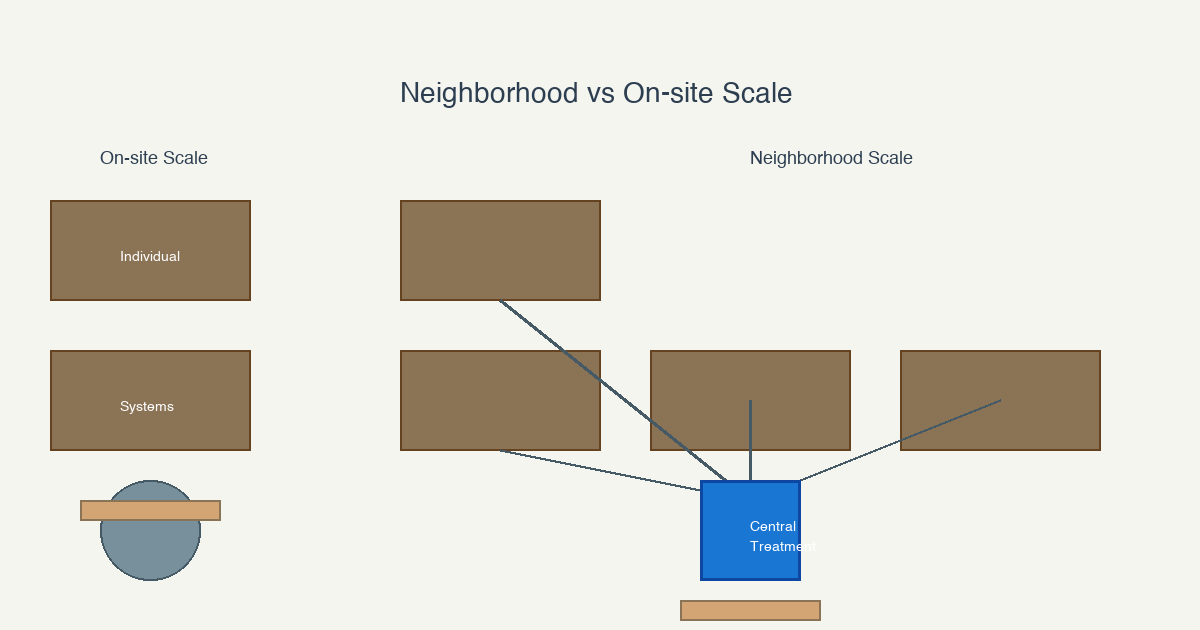
On-site scale systems serve individual properties, with each property having its own treatment and disposal system. Neighborhood-scale systems (also called cluster systems) serve multiple properties, collecting wastewater from several homes or buildings and treating it at a central location before disposal. Both approaches are decentralized (not connected to municipal sewers) but operate at different scales.
The EPA Decentralized Wastewater Systems Manual explains that scale selection depends on factors like property density, site conditions, cost considerations, and management requirements. The Florida Department of Health provides guidance on when neighborhood-scale vs on-site scale systems are appropriate for different situations.
For Miami-Dade County properties, understanding system scale options helps ensure appropriate septic system design based on property characteristics and site conditions. The Miami-Dade County DERM evaluates scale options when approving decentralized system designs.
Need help today?
Same-day service across Miami-Dade County. Licensed & insured.
Call Miami Septic ProsTechnical breakdown
On-site scale systems: On-site systems serve individual properties, with each property having its own septic tank or treatment unit and drainfield. These systems are self-contained and require individual maintenance. The EPA explains that on-site systems are appropriate for properties with adequate space, suitable soil conditions, and sufficient separation from water sources.
Neighborhood-scale systems: Neighborhood-scale (cluster) systems collect wastewater from multiple properties through a collection network and treat it at a central treatment facility before disposal. These systems can serve small neighborhoods, subdivisions, or groups of properties. The University of Florida IFAS Extension explains that cluster systems are appropriate when individual on-site systems are not feasible due to site constraints.
Scale selection factors: Factors that influence scale selection include property density (higher density may favor cluster systems), site conditions (restrictive soils may require cluster systems), cost considerations (cluster systems may be more cost-effective for multiple properties), management requirements (cluster systems require centralized management), and regulatory requirements (local regulations may favor one scale over another).
Cost considerations: On-site systems typically have lower initial costs per property but require individual maintenance. Neighborhood-scale systems may have higher initial costs but can be more cost-effective for multiple properties when shared infrastructure reduces per-property costs. The EPA explains that cost analysis should consider both initial and long-term operational costs.
Management requirements: On-site systems require individual property owners to maintain their systems. Neighborhood-scale systems require centralized management, which may be provided by a homeowners association, management company, or utility. The Florida DOH requires management plans for cluster systems to ensure proper operation and maintenance.
Site condition factors: Site conditions that may favor neighborhood-scale systems include restrictive soils, high water tables, limited lot sizes, and proximity to sensitive water sources. The Miami-Dade County DERM evaluates site conditions when determining appropriate system scale.
South Florida notes (local relevance)
Miami-Dade County's high property density, high water table, and proximity to sensitive water sources (Biscayne Aquifer) create situations where neighborhood-scale systems may be appropriate. The Miami-Dade County DERM evaluates scale options based on local conditions and may require cluster systems in areas where individual on-site systems are not feasible.
The county's coastal location and high water table mean that some properties may not have adequate space or soil conditions for individual drainfield installation. In these cases, neighborhood-scale systems with centralized treatment and disposal may be required. Professional septic system design services evaluate site conditions to determine appropriate system scale.
Miami-Dade DERM requires proper management plans for neighborhood-scale systems to ensure effective operation and protect groundwater quality. Both on-site and neighborhood-scale systems must comply with DERM regulations, but management requirements differ based on system scale.
Get a clear, no-pressure quote
Describe your job. We'll confirm price and schedule.
Get My Free Quote