
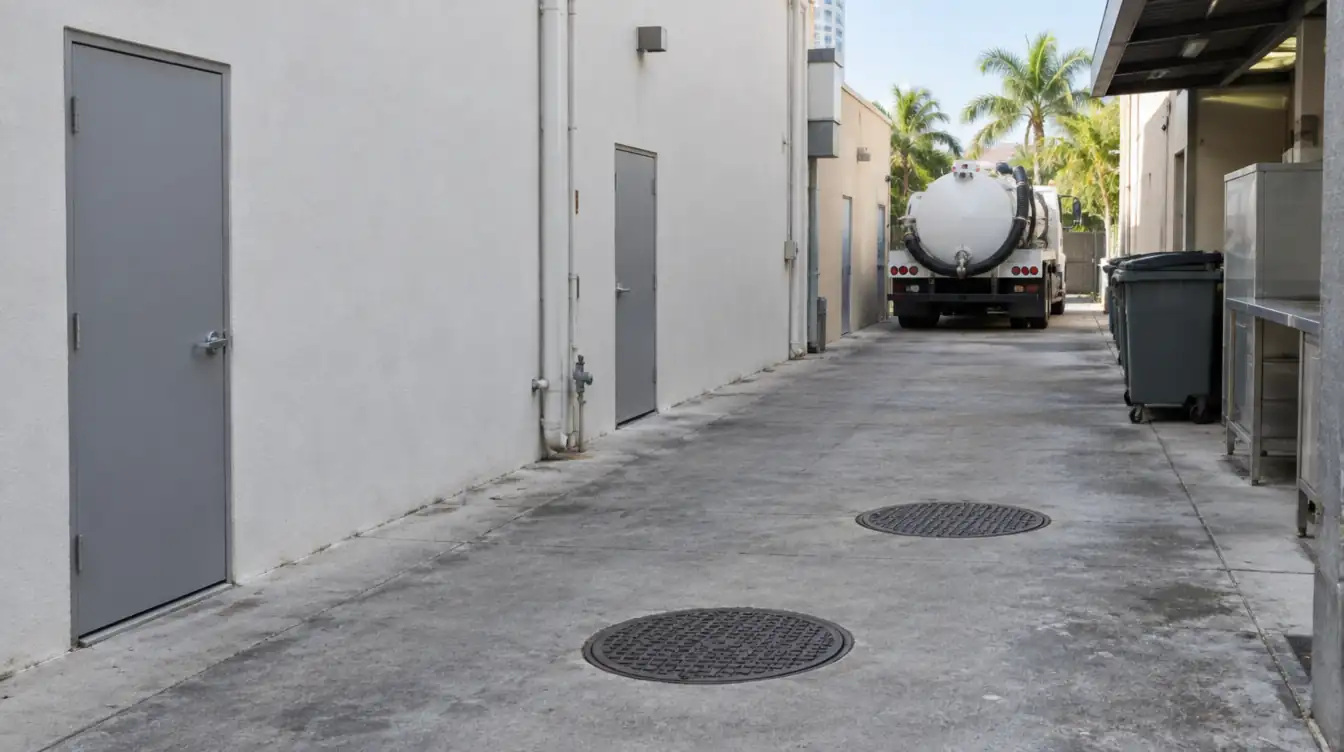
Commercial Septic and Grease Trap Services in Miami-Dade
Restaurants and food businesses in Miami-Dade need a County Fats, Oils and Grease (FOG) discharge permit and a grease interceptor that...
Free Fast Quote
Please fill out this form to request a free quote on your septic project and our team will respond to you right away.
- Free, no-obligation quote
- We aim to respond quickly
- Serving all of Miami-Dade County
Commercial and Grease Trap Services: the short answer
Restaurants and food businesses in Miami-Dade need a County Fats, Oils and Grease (FOG) discharge permit and a grease interceptor that is pumped and reported on schedule. Commercial sites on septic in a wellfield protection area also need a DERM wellfield permit.
Grease interceptor cleaning is reported to the County through its Grease Discharge Operating report, and the hauler must hold a County liquid waste transporter permit. Commercial septic systems have their own state operating permit, renewed every year.
The County is also extending sewer to commercial septic properties through its Commercial Corridors Program, which covers more than 1,000 commercial properties across five corridors.
Services in this category
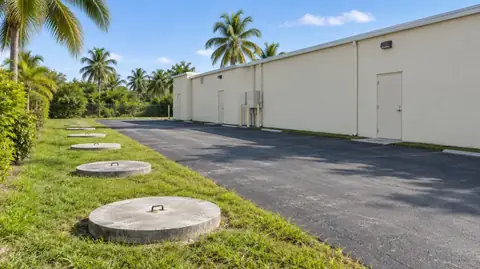
Commercial Septic Tank Service in Miami: Business Septic System Care & Maintenance
We pump, inspect and maintain septic systems for Miami-Dade businesses, including grease interceptors and aerobic...
See details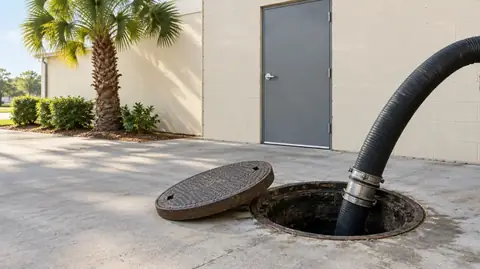
Grease Interceptor Cleaning in Miami: Professional Restaurant Grease Trap Service
We pump and clean restaurant and commercial grease interceptors and haul the waste to a permitted facility.
See details
Grease Trap Installation for Restaurants in Miami: Commercial Grease Trap Installation & Service
We install grease traps and in-ground grease interceptors for restaurants and food businesses.
See details
Questions
How often must a restaurant grease interceptor be pumped?
On the schedule its County permit and the facility's use require. For most permit classes each cleaning is reported to the County on a liquid waste manifest by the 20th of that month.
Is my business eligible for County sewer extension?
Ask Miami-Dade Water and Sewer whether your property is in one of the five Commercial Corridors, which cover more than 1,000 commercial properties.
Sources
Last updated: October 28, 2026. Facts and figures on this page come from these sources, opened on October 28, 2026. Prices are typical published ranges, not a quote.
- Fats, Oils and Grease (FOG) Discharge Control Operating Permit, Miami-Dade County, Department of Regulatory and Economic Resources. Opened 28 Oct 2026.
- Application for Wellfield Protection Permit (non-residential land uses served by septic tanks), Miami-Dade County RER, Division of Environmental Resources Management. Opened 28 Oct 2026.
- Rule 62-6.030, F.A.C.: Fees, Florida Administrative Code, Florida Department of State (flrules.org). Opened 28 Oct 2026.
- Grease Discharge Operating (GDO) Report, Miami-Dade County, Department of Regulatory and Economic Resources. Opened 28 Oct 2026.
- Connect 2 Protect: Septic to Sewer, Miami-Dade Water and Sewer Department. Opened 28 Oct 2026.