Miami-Dade County's Septic-to-Sewer Financial Assistance Program gives eligible homeowners with a Homestead Exemption up to $15,000 in grants, zero-percent interest loans or low-interest loans to connect to the county sewer. The county estimates a conversion costs a homeowner about $15,000, and the property must abut an existing sanitary gravity sewer.
What the program offers
The program pays up to $15,000 toward converting a septic system to the county's centralized sewer system, as part of the county's Connect 2 Protect initiative.[1] Help comes as a grant, a zero-percent interest loan or a low-interest loan, depending on household income, and funds are awarded first come, first served.[1]
Loans can be up to $15,000 and repaid over up to seven years. If the property is sold or transferred before a loan is repaid, the remaining balance is due at the time of sale.[1]
Who qualifies
The county lists these conditions:[1]
- You have a Homestead Exemption, and it stays valid for five years after you receive funding.
- Your property taxes are up to date and you owe no debt to Miami-Dade County.
- Your household meets the income criteria. Households receiving TANF, SSI or SNAP benefits may qualify.
- Your property abuts an existing sanitary gravity sewer.
Non-homestead properties, investment properties, multi-family units and non-residential properties (commercial, industrial, institutional) are not eligible.[1]
What it pays for
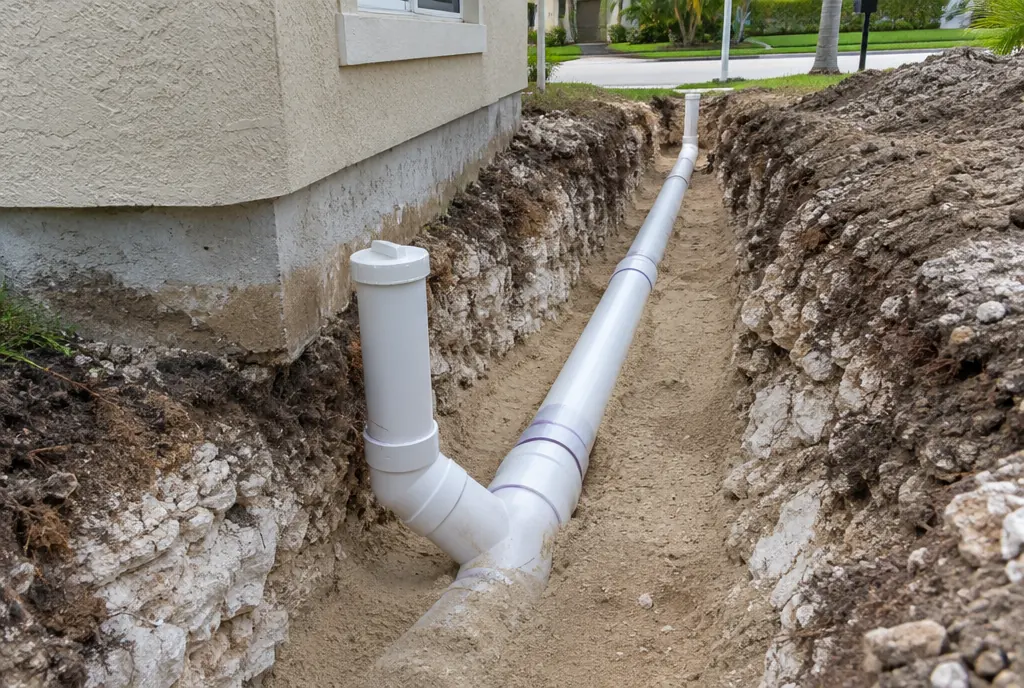
Eligible costs include on-site and off-site construction (including like-for-like landscape replacement), main extension construction, engineering and design fees, application, service, connection, inspection and plan review fees, and the proper abandonment of the septic system.[1] Upgraded landscaping and removal of the septic tank are not covered.[1]
How to apply
- Complete the county's online application form, or apply in person at a full-service or cashier-only WASD Customer Service location.
- Submit the supporting documents: your two most recent pay stubs, signed and dated tax returns for the most recent year (with W-2s and 1099s), proof of other income, verification of employment and proof of Homestead Exemption. The county also asks for the property deed and the septic system permit.
- Wait for the decision. The county says the review typically takes up to 30 days.[1]
For questions, the Water and Sewer Department lists 786-268-5111.[1]
Permits and who can do the work
Before connecting to an existing sewer lateral, the county says homeowners must secure a Pump-out and Abandon Permit from the State Department of Health, an allocation letter from the Miami-Dade Department of Regulatory and Economic Resources (RER), a plumbing permit from the county Building Department or the city, and approval from the Water and Sewer Department.[1]
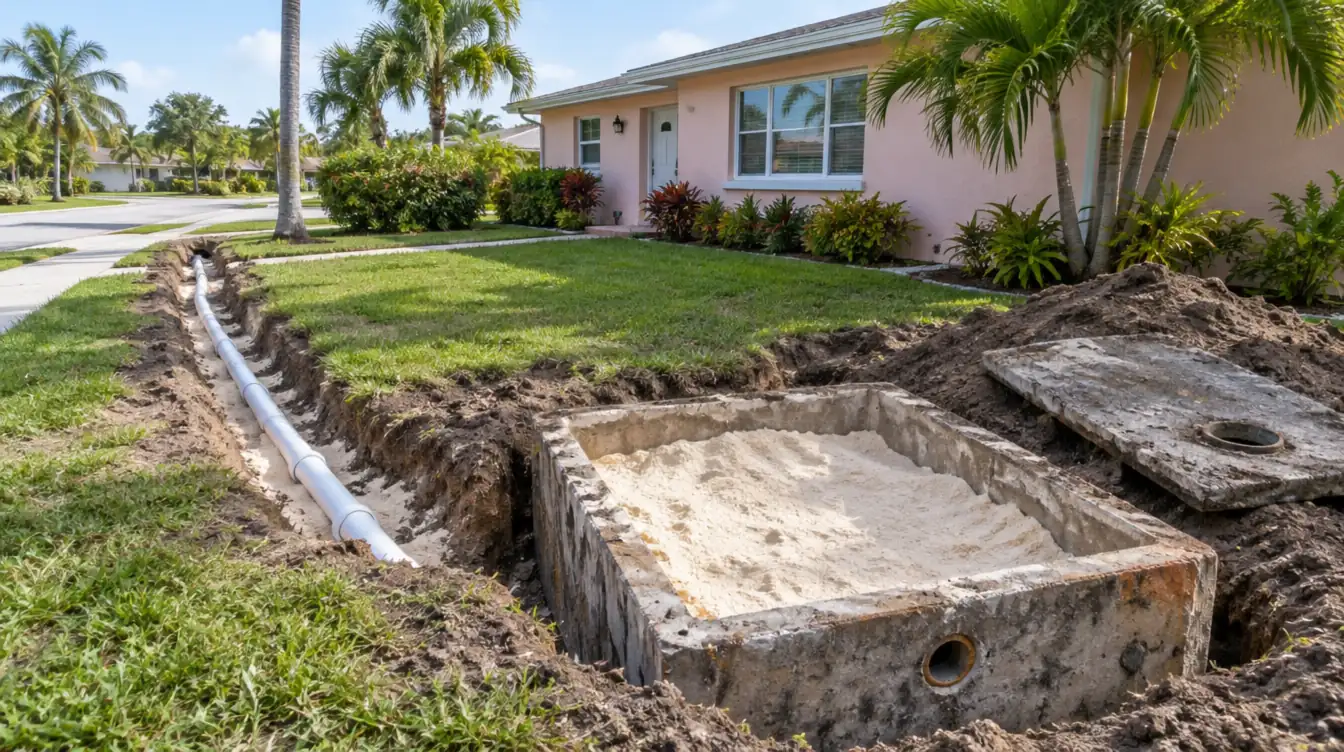
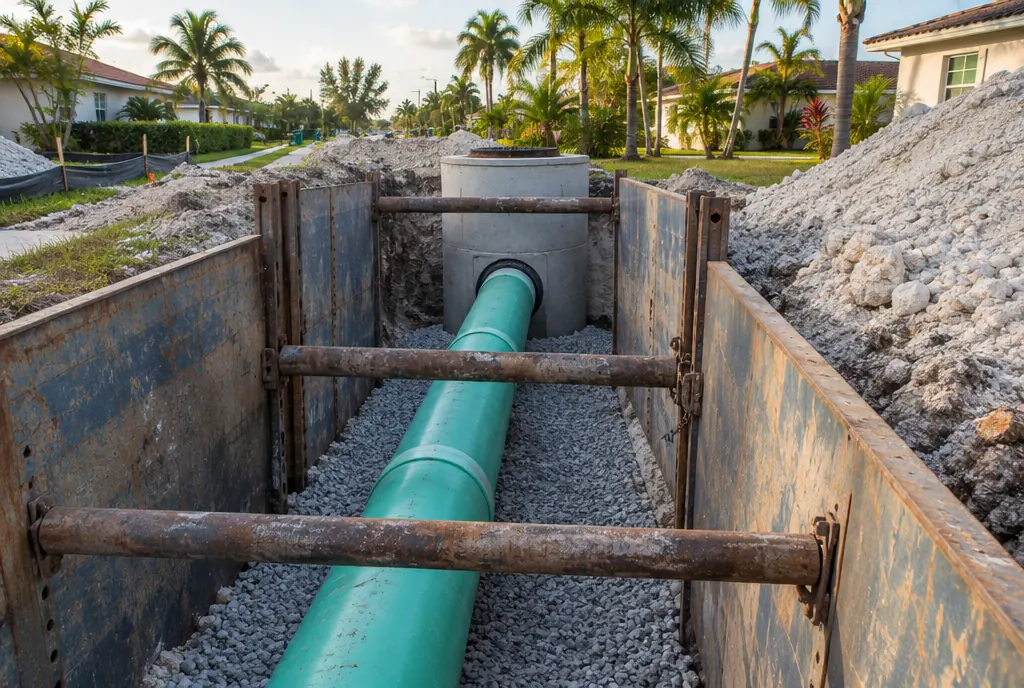
Only plumbers approved by the county can do work paid for by the program, and the county pays the grant or loan by check made out jointly to the homeowner and the plumber. The county publishes its list of pre-approved plumbers.[1]
How Miami Septic Pros fits in
If you want a quote for a septic-to-sewer conversion, send the form on this page and we will get back to you. If you plan to use the county program, say so in the details box: work paid for by the program must be done by a plumber on the county's approved list, so check the list before you sign anything.
See also the septic-to-sewer conversion service page.
Find a pro in your area
Enter your ZIP code and we will open the quote form for you. It takes about a minute.
Frequently asked questions
How much does a septic-to-sewer conversion cost in Miami-Dade?
The Miami-Dade Water and Sewer Department estimates a conversion costs a homeowner approximately $15,000. The assistance program can cover up to $15,000 for eligible homeowners.
Who qualifies for the Miami-Dade septic-to-sewer assistance program?
Homeowners with a Homestead Exemption that stays valid for five years after funding, who are current on property taxes, owe no debt to the county, meet the income criteria and whose property abuts an existing sanitary gravity sewer. Investment, multi-family and non-residential properties do not qualify.
How long does the county take to decide on an application?
The county says the review and final decision typically take up to 30 days.
Do I have to switch my private well to county water if I connect to sewer?
No. The county says you are not required to convert your well when you convert your septic system.
Sources
- Septic-to-Sewer Financial Assistance Program, Miami-Dade Water and Sewer Department. Accessed October 28, 2026.