
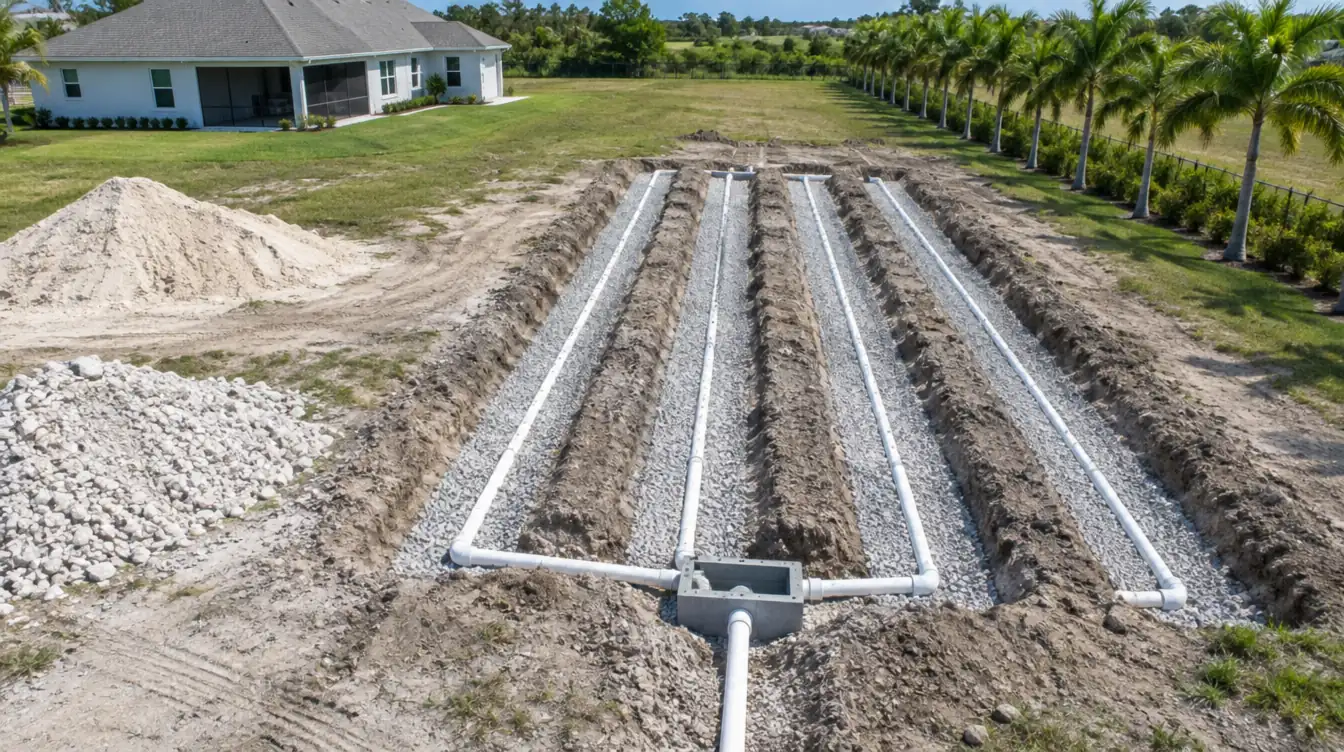
Drain Field Installation, Repair and Replacement in Miami-Dade
The drain field is where septic effluent is treated by the soil, and in Miami-Dade it is usually the part that fails first.
Free Fast Quote
Please fill out this form to request a free quote on your septic project and our team will respond to you right away.
- Free, no-obligation quote
- We aim to respond quickly
- Serving all of Miami-Dade County
Drain Fields: the short answer
The drain field is where septic effluent is treated by the soil, and in Miami-Dade it is usually the part that fails first. New and replacement drain fields here must sit at least 36 inches above the wet-season high water table, which on many lots means a raised or mound field.
Groundwater is the main reason. The County's 2018 study found 58,349 residential septic parcels where peak groundwater already comes within 42 inches of the surface, projected to rise to 67,234 by 2040. State rules also class oolitic limestone, common under Miami-Dade, as a severely limited soil.
Troubleshooting and jetting can restore a field that is clogged rather than drowned. Expanding a system, for an addition or more bedrooms, means re-sizing the field to the new design flow.
Services in this category
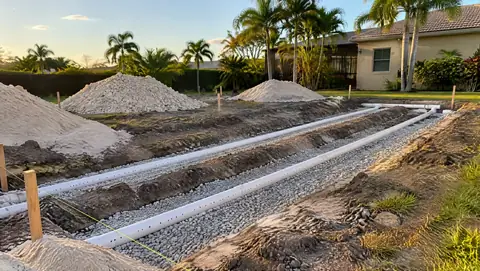
Drain Field Installation in Miami: Professional Leach Field Installation & Design
We install drain fields for new and replacement septic systems across Miami-Dade.
See details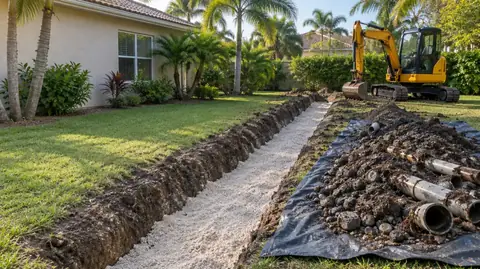
Drain Field Replacement in Miami: Complete Leach Field Replacement & System Restoration
We replace failed drain fields and, where the whole system has failed, the full septic system.
See details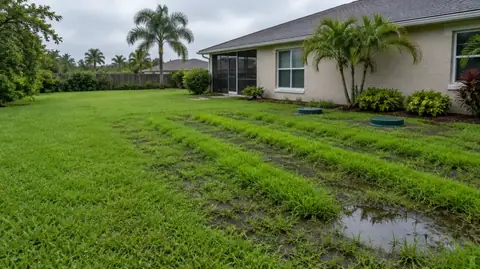
Services Drain Field Troubleshooting...
We find out why a drain field is slow or wet (a full tank, a blocked line, a tilted distribution box or a failing...
See details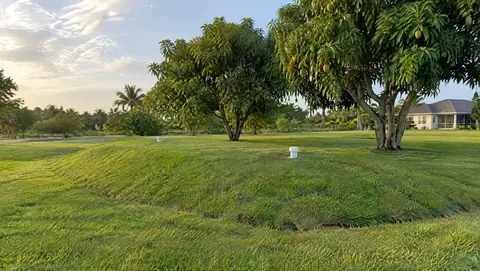
Expansion of Existing Septic Systems in Miami: Add Capacity & Upgrade Systems
We expand septic systems when a home adds bedrooms or floor area, or a business adds flow.
See details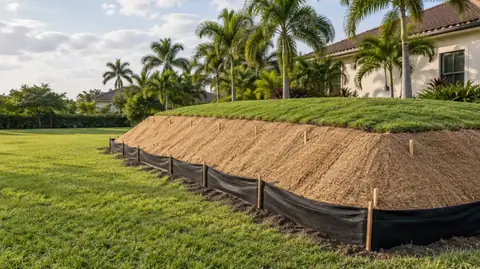
Erosion Control Around Septic Systems in Miami: Professional Soil Protection & Drain Field Maintenance
We protect drain fields and tank areas from washouts and runoff with grading, ground cover and drainage that moves...
See details
Septic tank and drainfield replacement by city
Each page covers what is different about drainfield replacement in that place: septic counts, groundwater and housing age, from County and Census data.
Questions
Why do drain fields fail so often in Miami-Dade?
High groundwater leaves little dry soil under the field, and much of the county sits on porous limestone. Older fields were also designed to a 12-inch separation, against 24 inches under state rules today and 36 under the County's.
Can a drain field be repaired instead of replaced?
Sometimes: jetting clogged lines, replacing a distribution box or rebuilding part of the field. A field that sits in groundwater every wet season usually needs replacing to today's separation rule.
Sources
Last updated: October 28, 2026. Facts and figures on this page come from these sources, opened on October 28, 2026. Prices are typical published ranges, not a quote.
- Ordinance relating to Onsite Sewage Treatment and Disposal Systems (Ordinance 22-83, adopted 7 Jul 2022), Miami-Dade County Board of County Commissioners. Opened 28 Oct 2026.
- Septic Systems Vulnerable to Sea Level Rise (final report, November 2018), Miami-Dade County RER, WASD and Florida Department of Health in Miami-Dade. Opened 28 Oct 2026.
- Drain Field Repair Cost in Florida (2026), Septic & Well Pro (independent cost guide, 4 Apr 2026). Opened 28 Oct 2026.
- Rule 62-6.006, F.A.C.: Site Evaluation Criteria, Florida Administrative Code, Florida Department of State (flrules.org). Opened 28 Oct 2026.