
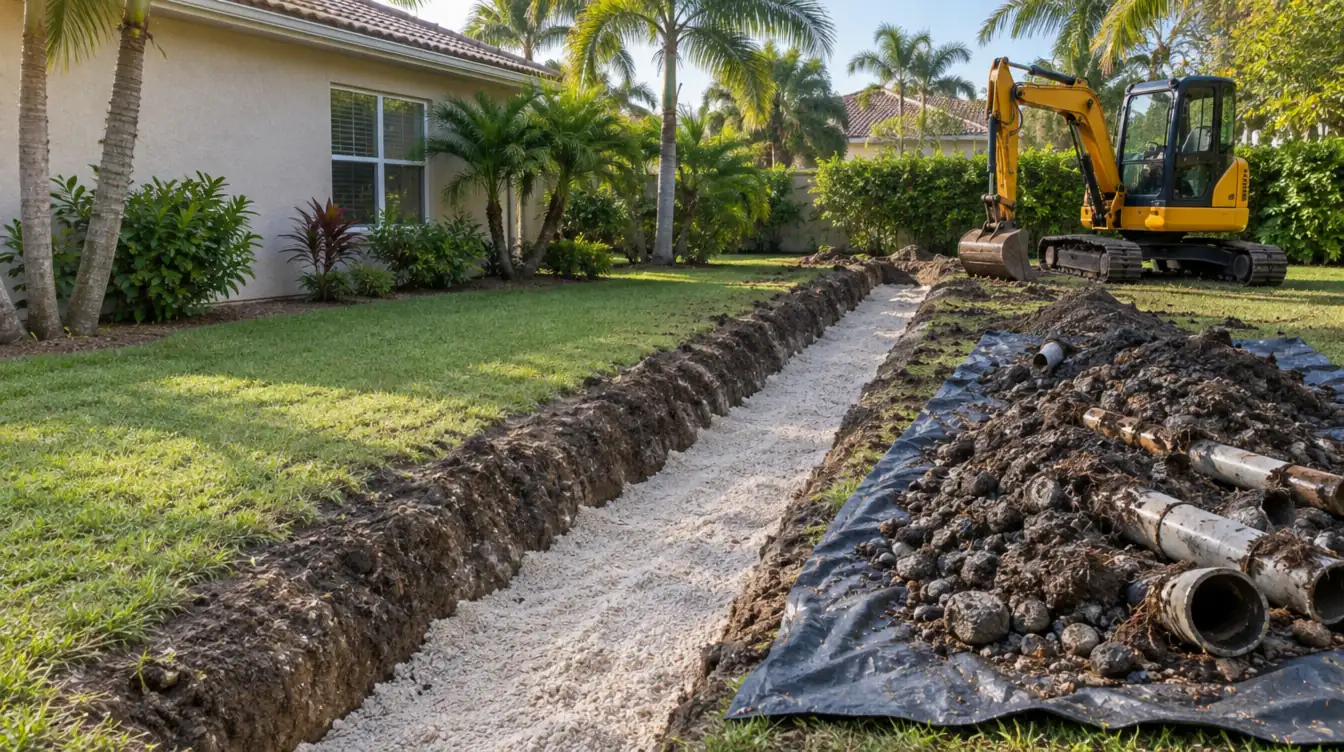
Septic Tank & Drainfield Replacement in Miami, FL
Full septic tank and drainfield replacement services in Miami-Dade County, including design, permits, and installation. Serving Miami, Hialeah, Homestead, Kendall, Doral, and Coral Gables. We coordinate engineers, handle permits, and ensure your replacement system meets all current Miami-Dade County standards.
Free Fast Quote
Please fill out this form to request a free quote on your septic project and our team will respond to you right away.
- Free, no-obligation quote
- We aim to respond quickly
- Serving all of Miami-Dade County
Symptoms Requiring Replacement
Knowing when your septic system needs complete replacement versus repair can save you time and money. Miami Septic Pros provides full septic tank and drainfield replacement services throughout Miami-Dade County, including Miami, Hialeah, Homestead, Kendall, Doral, and Coral Gables.
Common symptoms indicating replacement may be necessary include:
- Persistent backups despite pumping and repairs
- Drainfield permanently saturated due to rising water table
- System age over 20 years with multiple component failures
- Soil failure preventing proper percolation
- Repeated drainfield failures in the same location
- System no longer meets current Miami-Dade County standards
- Environmental violations requiring system upgrade
If your system shows these symptoms, replacement with a modern, compliant system may be necessary. However, if targeted repairs can restore function, see our septic system repair service for information about repair options.
What is different about drainfield replacement in Miami
A septic tank and drainfield replacement in the City of Miami is a whole new system under Ordinance 22-83: DERM approval, an engineered design, an advanced treatment unit and a drain field at least 36 inches above the wet-season high water table. Before any design, we check the street, because the city is largely sewered and a replacement is not allowed where sewer abuts the lot.
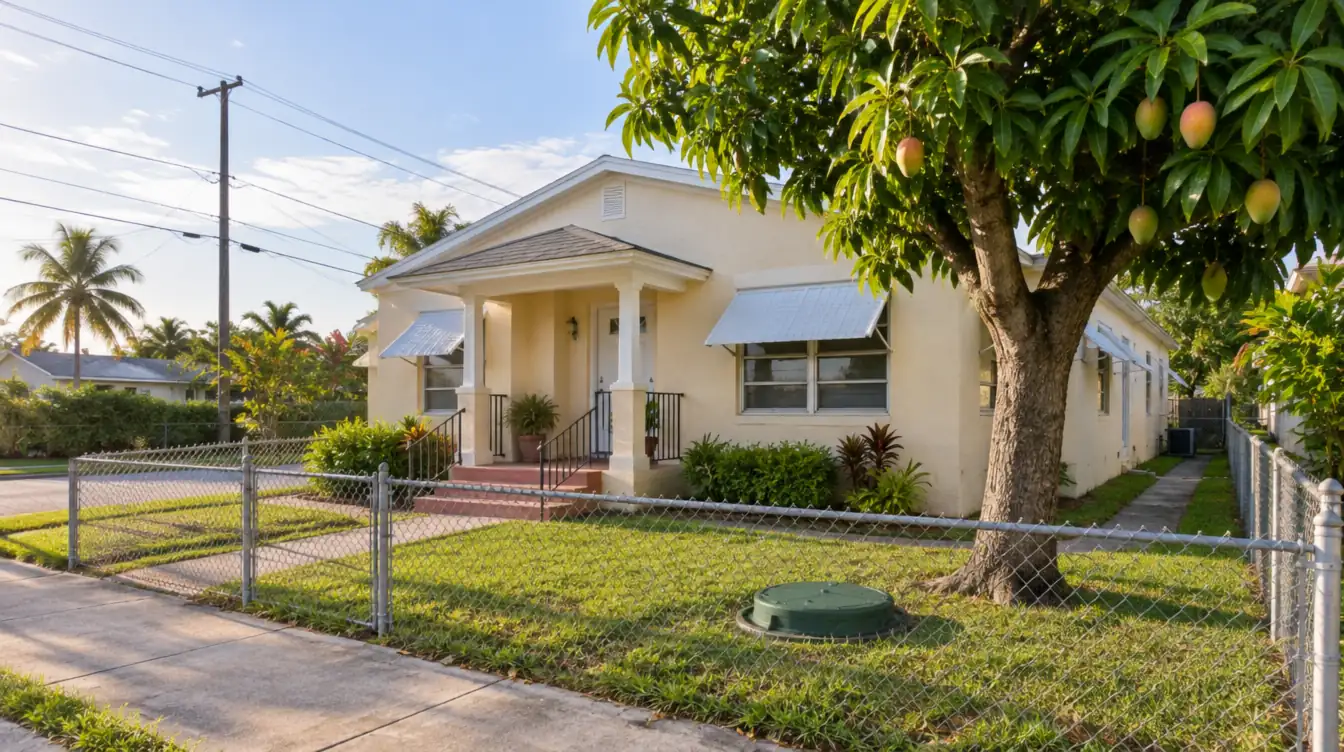
Of the 1,603 residential septic parcels the County modelled in the city in 2018, 156 already reached peak groundwater within 42 inches of the surface, and 177 were projected by 2030. On those lots the replacement field usually has to be raised to meet the 36-inch rule.
City lots are often small, and the system must keep 100 feet from canals and the bay and, where public water is not available, 50 feet from property lines. Fitting all of that around an existing house is most of the design work.
What the numbers say about Miami
- In the County's 2018 groundwater study, 156 of Miami's 1,603 modelled residential septic parcels (10%) already reached peak groundwater within 42 inches of the surface; the projection for 2030 was 177. (Miami-Dade, 2018)
- 75 of those Miami parcels (5%) reached peak groundwater within 24 inches, the level the County calls periodic failure. (Miami-Dade, 2018)
- 31% of Miami's homes are single-family houses; the median owner-occupied home is valued at $518,100. (U.S. Census ACS 2020-2024)
Sources for this section and the Miami questions: Miami-Dade WASD, 2020 data; Miami-Dade, 2018; U.S. Census ACS 2020-2024; Ordinance 22-83. Opened October 28, 2026.
More about drainfield replacement
What does not change from city to city is on our Drain Field Replacement in Miami: Complete Leach Field Replacement & System Restoration page.
Service Area
We provide septic tank and drainfield replacement services throughout Miami-Dade County, serving:
- Miami
- Hialeah
- Homestead
- Kendall
- Doral
- Coral Gables
- Miami Beach
- Aventura
- And all surrounding Miami-Dade communities
Frequently Asked Questions
How much does septic tank and drainfield replacement cost in Miami-Dade?
Replacement costs vary significantly based on system type, size, and site conditions. Advanced treatment systems required by Miami-Dade County regulations typically cost significantly more than conventional systems. Standard residential replacements typically range from $15,000 to $30,000 or more, depending on system requirements. We provide detailed estimates during your consultation.
How long does the replacement process take?
Total timeline from initial assessment to completed installation typically ranges from 4-8 weeks. This includes permitting (several weeks for DERM approval), installation (1-3 weeks), and post-installation inspection. Complex projects or permit delays can extend this timeframe.
What type of system will I need for replacement?
Miami-Dade County prohibits Type 1 conventional systems for replacements. You will need a Type 2 (secondary treatment), Type 3 (advanced secondary treatment), or Type 4 (Florida Keys Nutrient Reduction) system depending on your property type, wastewater volume, and proximity to surface water bodies.
Do I need permits for replacement?
Yes, prior written approval from the DERM Director is mandatory before any replacement system installation. The permitting process requires soil evaluation, site plan, system design, and post-installation inspection. We handle all necessary permits and coordinate with DERM.
What is the 50% reserve drainfield area requirement?
Miami-Dade County requires a reserve drainfield area equal to half the size of the initial drainfield. This reserve area is set aside for future system expansion or replacement, ensuring adequate space for system maintenance and upgrades.
Can I finance my replacement system?
Financing options vary, and we can discuss payment plans during your consultation. Some homeowners may qualify for assistance programs through Miami-Dade County or state programs. Contact DERM directly for information about available grants, loans, or assistance programs.
Miami questions
Is replacing a septic system in Miami worth it if sewer is coming?
If a sewer line already abuts the property, you cannot replace the septic system; you connect. If sewer is only planned, ask the utility about timing before committing to an engineered replacement.
Can a City of Miami lot still take a septic replacement?
Only where no public sewer abuts the property. With 2,772 septic parcels left in a city of more than 220,000 homes, many septic houses already have sewer at the street, and then Miami-Dade requires a connection instead of a new system.