
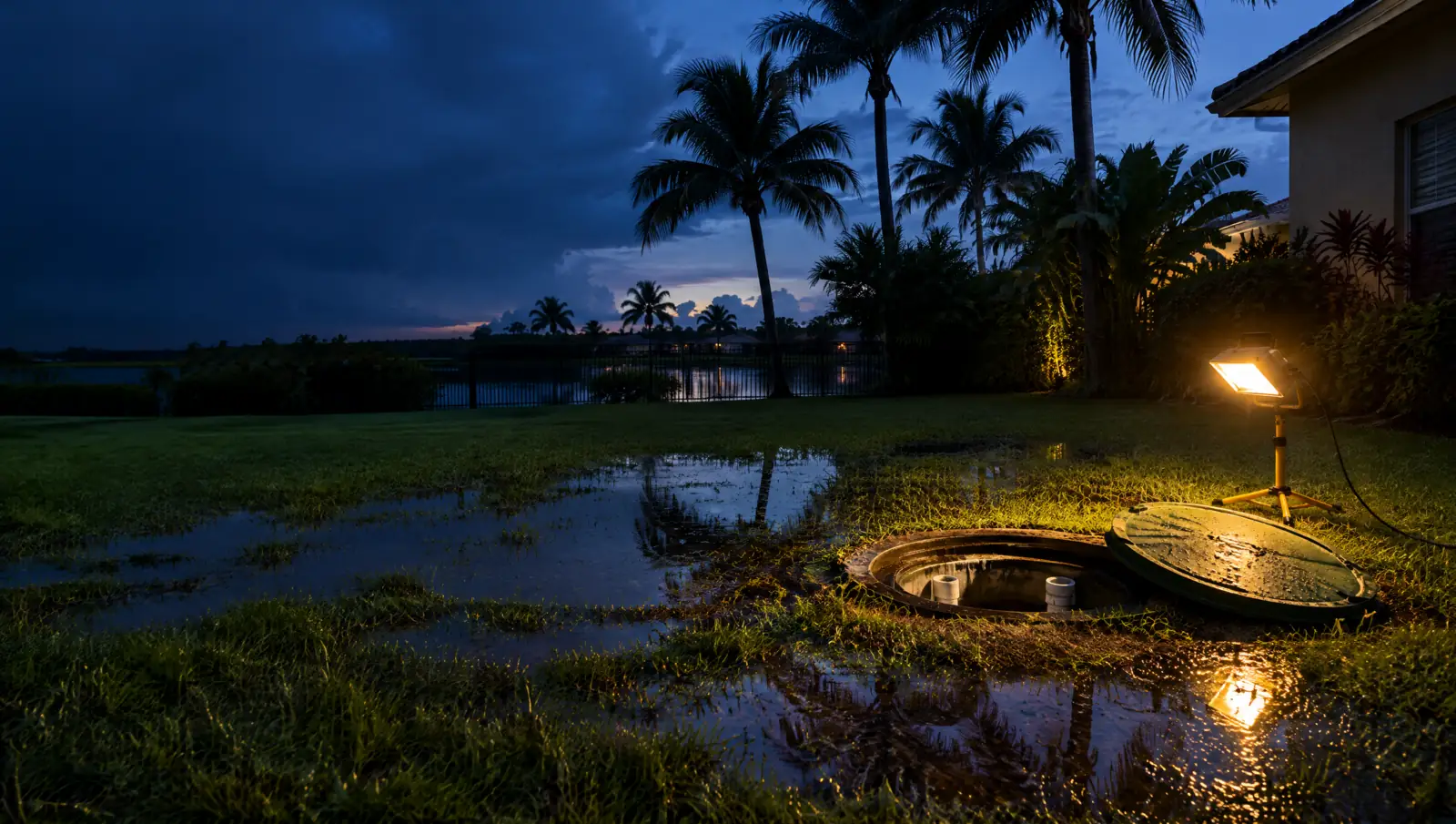
Emergency Septic Pumping in Miami, FL
When your septic system backs up or overflows, you need immediate professional help.
Free Fast Quote
Please fill out this form to request a free quote on your septic project and our team will respond to you right away.
- Free, no-obligation quote
- We aim to respond quickly
- Serving all of Miami-Dade County
Fast Response Across Miami-Dade
When your septic system backs up or overflows, you need immediate help.
Response times vary based on emergency severity. Sewage inside a home is treated as the most urgent call. We aim to respond quickly; tell us if it's an emergency.
What is different about emergency pumping in Miami
Most emergency calls from City of Miami septic owners come in the wet season. Miami International Airport averages 51.64 inches of rain between May and October out of 67.41 a year, and the County's 2018 study found 156 of the city's 1,603 modelled residential septic parcels already reaching peak groundwater within 42 inches of the surface.
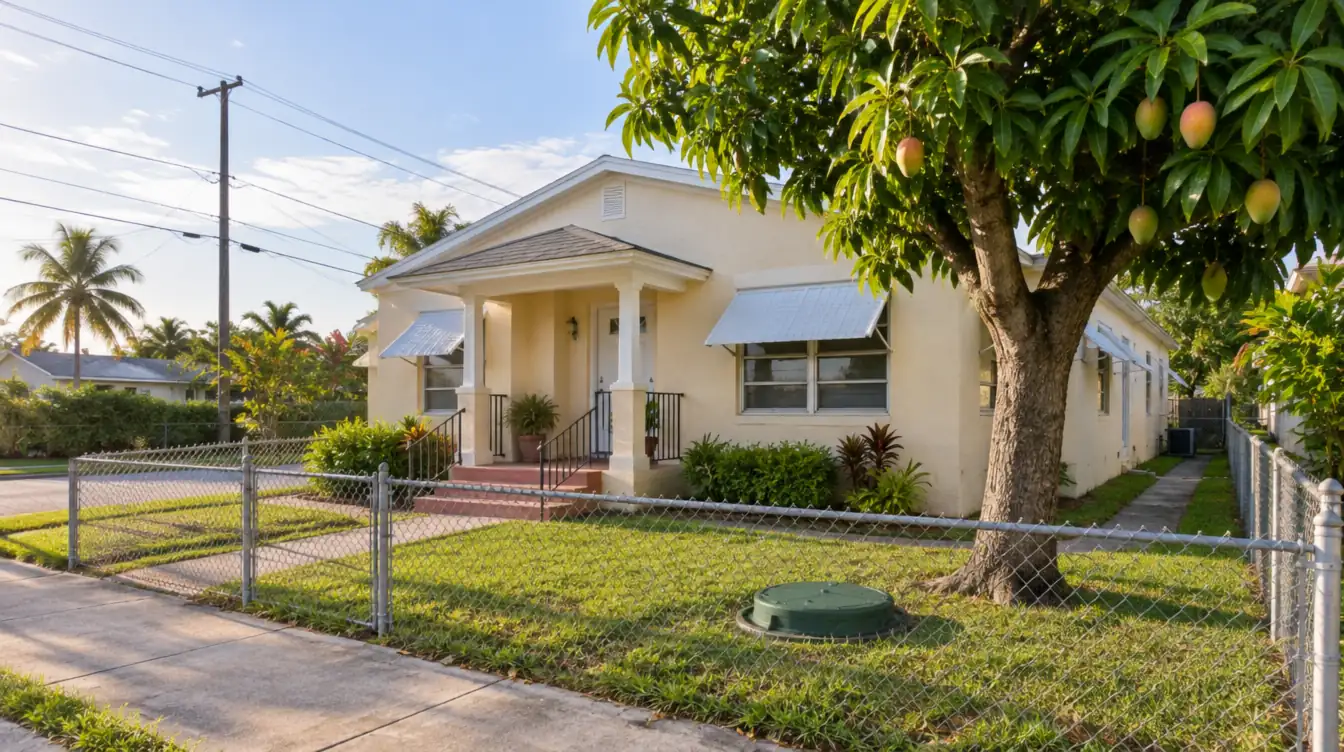
Because so much of the city is sewered, we first confirm which system the house has. A blocked sewer lateral and a full septic tank look the same from inside; the fix is different.
What the numbers say about Miami
- In the County's 2018 groundwater study, 156 of Miami's 1,603 modelled residential septic parcels (10%) already reached peak groundwater within 42 inches of the surface; the projection for 2030 was 177. (Miami-Dade, 2018)
- 75 of those Miami parcels (5%) reached peak groundwater within 24 inches, the level the County calls periodic failure. (Miami-Dade, 2018)
- The County's 2020 billing data counted 2,772 parcels with septic systems in Miami, about 2% of the county total, against about 223,826 homes. (Miami-Dade WASD, 2020 data) (U.S. Census ACS 2020-2024)
Sources for this section and the Miami questions: Miami-Dade WASD, 2020 data; Miami-Dade, 2018; U.S. Census ACS 2020-2024; NOAA NCEI; Septic & Well Pro, 2026; Septic & Well Pro, 2026. Opened October 28, 2026.
Septic emergencies in Miami: what to do
What counts as a septic emergency
Call for an emergency pump-out if sewage is backing up into a tub, shower or floor drain, if sewage is surfacing in the yard, if toilets will not flush at all, or if a septic alarm keeps sounding after you have stopped using water. Slow drains and gurgling are warnings; book a visit, but they are not usually an emergency yet.
The first hour
Stop all water use: no laundry, dishwasher, showers or flushing. Keep children and pets away from sewage indoors and from wet ground over the tank and drain field. Do not open the tank yourself, and do not use chemical drain openers. If sewage is inside, keep the room closed and ventilated and switch off electrical appliances that are standing in water. Then call us.
Where we answer emergency calls
We take emergency calls across Miami-Dade County. Most come from the parts of the county where septic is common: unincorporated Miami-Dade held 59% of the county's septic parcels in the 2020 count, and among the cities on our pages, Coral Gables (7,934), Palmetto Bay (6,158), Pinecrest (5,217) and Hialeah (4,254) had the most. (Miami-Dade WASD, 2020 data)
Why emergencies peak from May to October
Miami averages 51.64 of its 67.41 inches of yearly rain between May and October. When groundwater rises into a drain field, the tank has nowhere to send water and the house backs up. The County's 2018 study found 58,349 residential septic parcels where peak groundwater already comes within 42 inches of the surface. (NOAA NCEI) (Miami-Dade, 2018)
What an emergency pump-out costs
In Florida, emergency pumping typically costs $300 to $500 in business hours and $450 to $700 at night or on weekends. Professional sewage cleanup inside a home typically costs $2,000 to $10,000, which is why stopping water use early matters. (Septic & Well Pro, 2026) (Septic & Well Pro, 2026)
Emergency pages for other areas: Coral Gables, Doral, Hialeah, Homestead, Kendall, Pinecrest, Palmetto Bay, Cutler Bay.
More about emergency pumping
What does not change from city to city is on our Septic Services in Miami: Response & Urgent Help page.
Service Area Cities
- Miami
- Hialeah
- Homestead
- Kendall
- Doral
- Coral Gables
- Miami Beach
- Aventura
Frequently Asked Questions
How quickly can you respond to an emergency septic pumping call?
For critical situations with sewage backup in the home, we prioritize these calls and may arrive even sooner.
Do you charge extra for emergency or after-hours service?
Yes, emergency and after-hours service includes a reasonable surcharge to cover the cost of after-hours work. We will always provide transparent pricing before starting work.
What should I do while waiting for emergency service?
Stop using all water in your home immediately. Do not flush toilets, run dishwashers, or use washing machines. This prevents further backup and potential damage.
Will emergency pumping fix my septic problem permanently?
Emergency pumping addresses the immediate overflow, but we will inspect your system to identify the root cause. Some issues require repairs or system replacement, which we can discuss after the emergency is resolved.
What forms of payment do you accept for emergency service?
We accept cash, credit cards, and checks. For commercial accounts, we can arrange invoicing and payment terms.
Miami questions
I live in the City of Miami and my drains backed up. Septic or sewer?
Check your water bill: a sewer charge means the house is on sewer. With only 2,772 septic parcels in the city in the County's 2020 count, most backups in Miami are sewer laterals, but older houses on septic do back up after heavy rain.