
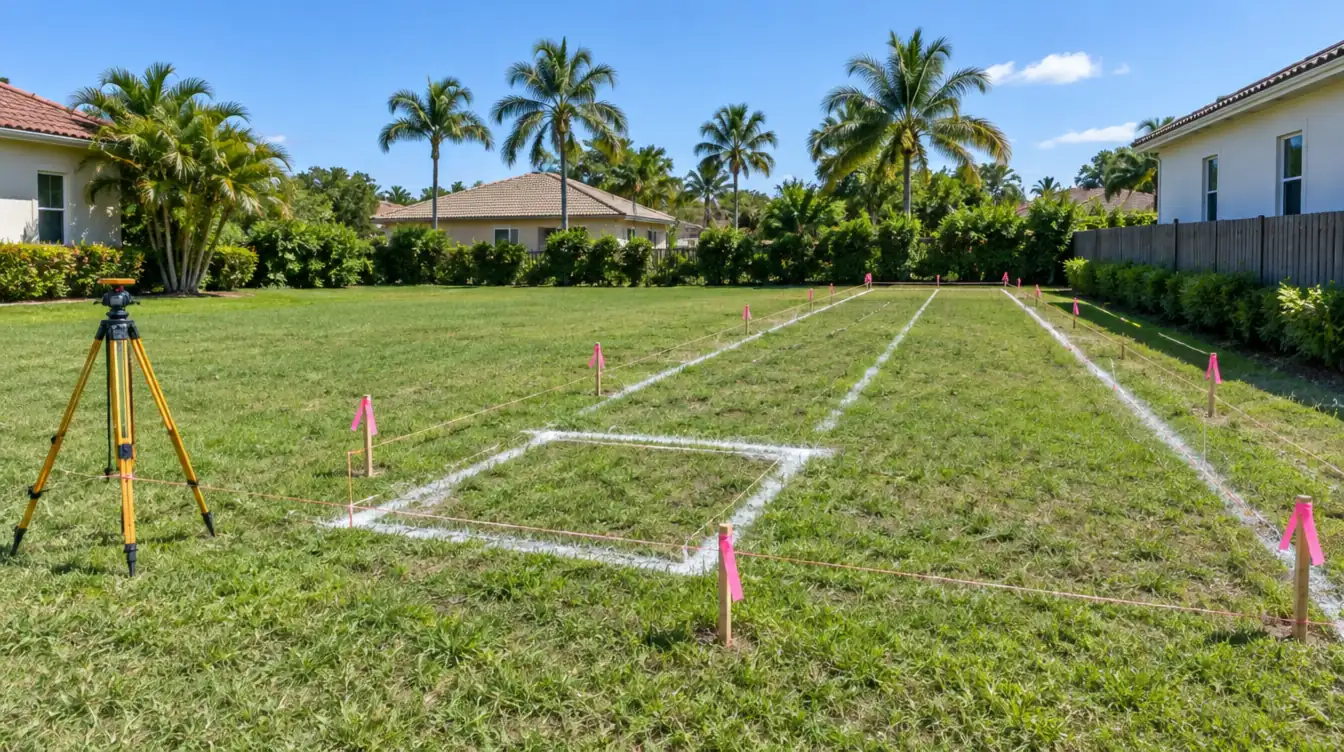
Septic System Design & Permits in Coral Gables, FL
Designing a septic system in Coral Gables usually means replacing an older one on an established lot: the city has 7,934 septic parcels in the...
Free Fast Quote
Please fill out this form to request a free quote on your septic project and our team will respond to you right away.
- Free, no-obligation quote
- We aim to respond quickly
- Serving all of Miami-Dade County
Septic design and permits in Coral Gables: the short answer
Designing a septic system in Coral Gables usually means replacing an older one on an established lot: the city has 7,934 septic parcels in the County's 2020 count, more than any other municipality, and a median home built in 1969. New and whole replacement systems need an engineered design approved by DERM and a permit from the Department of Health in Miami-Dade.
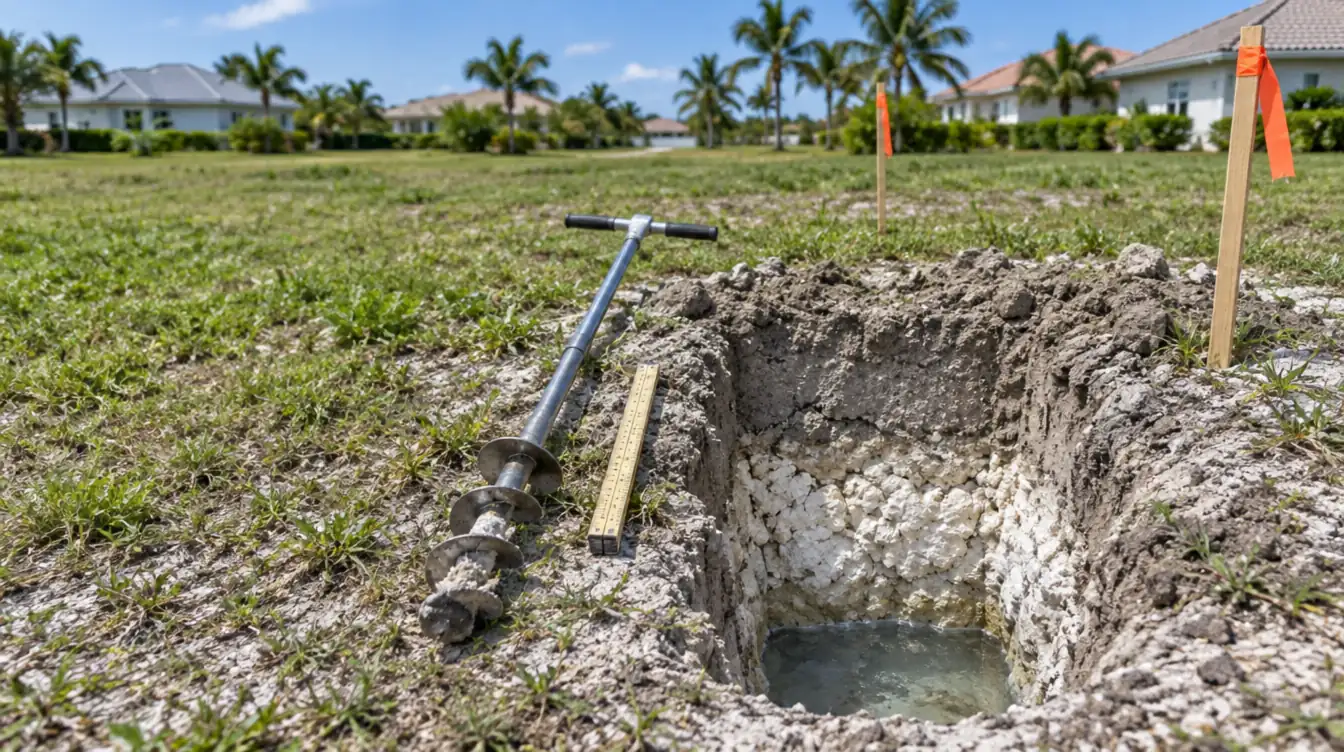
As in much of Miami-Dade, many older Coral Gables drain fields sit in porous limestone rather than soil, a condition the County's 2018 study flags because the limestone Biscayne Aquifer can move groundwater up to 670 feet a year. State rules treat oolitic limestone as a severely limited soil, so the design usually specifies what fill goes under the field and how deep.
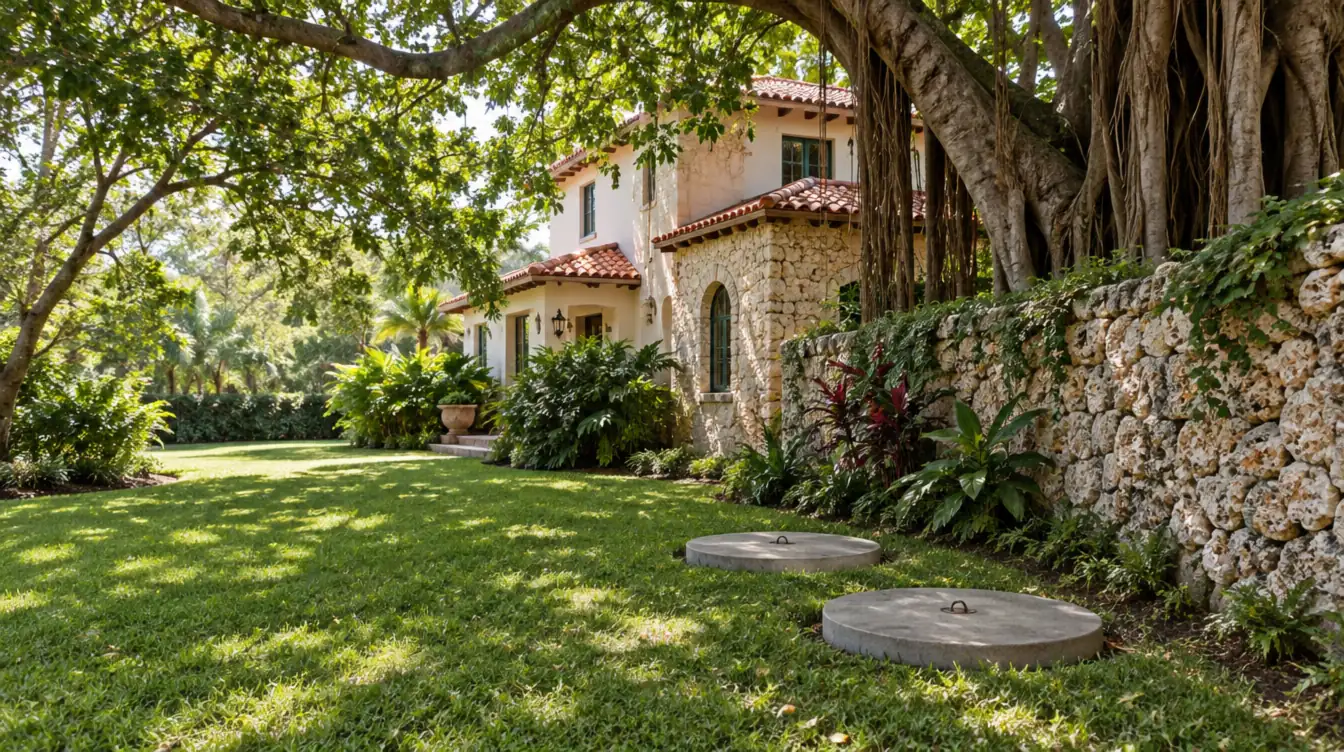
Groundwater is less of a problem here than in South Dade: the County's 2018 study found 195 of the city's 2,930 modelled residential septic parcels, under 7%, at its 42-inch threshold. The constraint is more often space, with mature trees, coral rock walls and pools to work around, and keeping the system 100 feet from the city's canals.
What the numbers say about Coral Gables
- In the County's 2018 groundwater study, 195 of Coral Gables's 2,930 modelled residential septic parcels (7%) already reached peak groundwater within 42 inches of the surface; the projection for 2030 was 256. (Miami-Dade, 2018)
- The 2018 study also counted 112 non-residential septic parcels in Coral Gables, 15 of them at the 42-inch groundwater threshold. (Miami-Dade, 2018)
- Coral Gables has its own water and sewer utility, one of those that supplied non-sewer data directly to the County's 2018 study. (Miami-Dade, 2018)
How we handle design and permits in Coral Gables
- We confirm whether public sewer is available at the lot.
- We arrange the site evaluation the Department of Health requires.
- A Florida professional engineer prepares signed and sealed plans for DERM.
- We submit both applications and follow them through inspection.
State fees are $100 for a new system application and plan review and $115 for a site evaluation, plus County review and engineering. (Rule 62-6.030)
Septic design and permits in Coral Gables: questions
Who approves a septic design in Coral Gables?
Miami-Dade DERM approves new and whole replacement systems under Ordinance 22-83, and the Florida Department of Health in Miami-Dade issues the construction permit. Check also with the city for any building or landscape approvals on the lot.
Why does limestone matter for a Coral Gables septic design?
Because effluent can move quickly through porous limestone without enough treatment. Florida rules class oolitic limestone as a severely limited soil, so designs here specify suitable fill and an advanced treatment unit.
Sources
Last updated: October 28, 2026. Facts and figures on this page come from these sources, opened on October 28, 2026. Prices are typical published ranges, not a quote.
- Rule 62-6.030, F.A.C.: Fees, Florida Administrative Code, Florida Department of State (flrules.org). Opened 28 Oct 2026.
- Onsite Sewage FAQ: Permitting, Florida Department of Environmental Protection (last modified 24 Sep 2026). Opened 28 Oct 2026.
- Ordinance relating to Onsite Sewage Treatment and Disposal Systems (Ordinance 22-83, adopted 7 Jul 2022), Miami-Dade County Board of County Commissioners. Opened 28 Oct 2026.
- Resolution creating a Septic to Sewer Task Force, Agenda Item 11(A)(10), 8 July 2021 (Exhibit A, WASD charts), Miami-Dade County Board of County Commissioners. Opened 28 Oct 2026.
- Septic Systems Vulnerable to Sea Level Rise (final report, November 2018), Miami-Dade County RER, WASD and Florida Department of Health in Miami-Dade. Opened 28 Oct 2026.
- Coral Gables, FL: housing (ACS 2020-2024 5-year estimates), U.S. Census Bureau, American Community Survey (via Census Reporter). Opened 28 Oct 2026.
- Rule 62-6.006, F.A.C.: Site Evaluation Criteria, Florida Administrative Code, Florida Department of State (flrules.org). Opened 28 Oct 2026.