
Septic Tank Pumping in Palmetto Bay, FL
Palmetto Bay has one of the highest counts of septic systems of any city in Miami-Dade, 6,158 parcels in the County's 2020 data, in a village of...
Free Fast Quote
Please fill out this form to request a free quote on your septic project and our team will respond to you right away.
- Free, no-obligation quote
- We aim to respond quickly
- Serving all of Miami-Dade County
Septic tank pumping in Palmetto Bay: the short answer
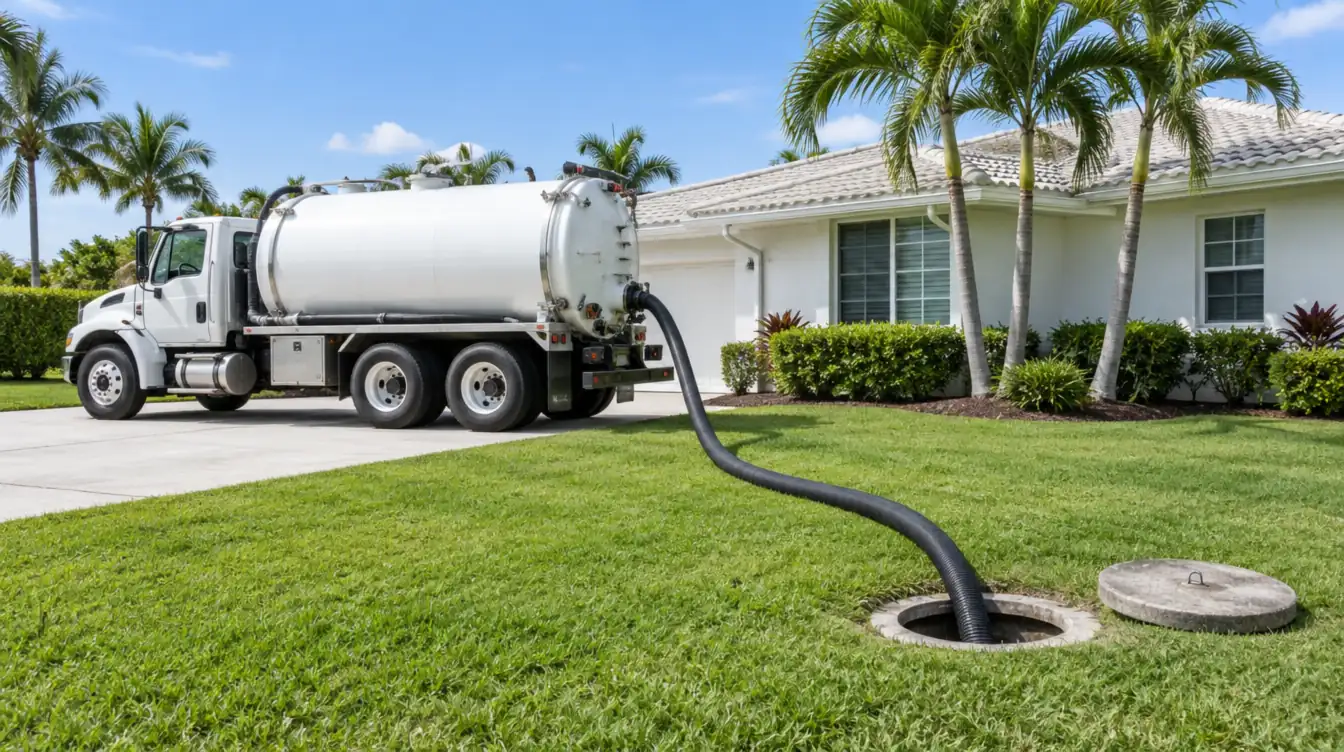
Palmetto Bay has one of the highest counts of septic systems of any city in Miami-Dade, 6,158 parcels in the County's 2020 data, in a village of about 8,700 homes. Pumping every three to five years, the EPA's guide for a household tank, is part of owning a house here.
Eighty-four percent of Palmetto Bay homes are single-family houses, and the median one dates from 1976, so most tanks are original or close to it. Older tanks often lack risers, have concrete lids under the lawn and outlet tees that have never been checked. A pump-out is the cheapest time to look at all of that, because the tank is open and empty.
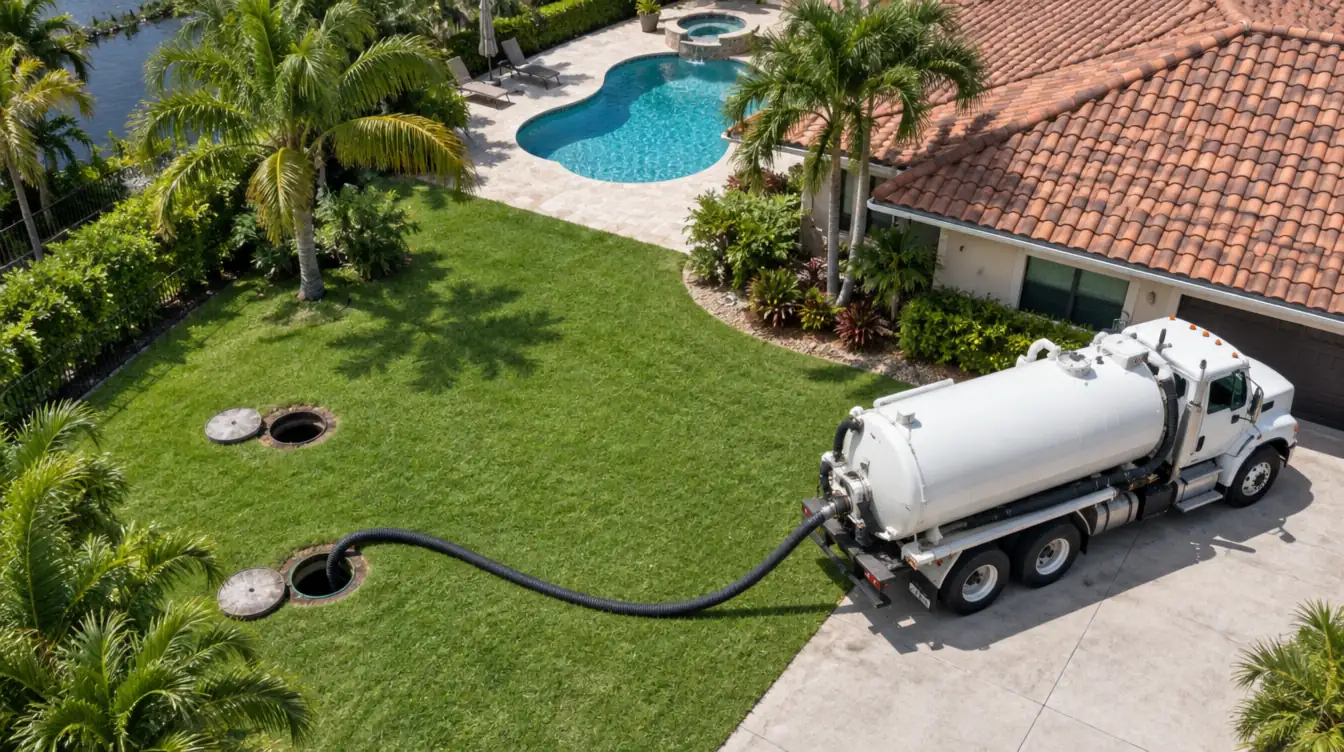
The village is low and close to Biscayne Bay. The County's 2018 study found 893 Palmetto Bay residential septic parcels already reach peak groundwater within 42 inches of the surface, and expected that to reach 1,753 by 2030. Keeping solids in the tank, where pumping removes them, protects a drain field that has less dry soil to work with each year.
What the numbers say about Palmetto Bay
- The County's 2020 billing data counted 6,158 parcels with septic systems in Palmetto Bay, about 5% of the county total, against about 8,681 homes. (Miami-Dade WASD, 2020 data) (U.S. Census ACS 2020-2024)
- Palmetto Bay's median home was built in 1976, and 64% of homes were built before 1980. (U.S. Census ACS 2020-2024)
- In the County's 2018 groundwater study, 893 of Palmetto Bay's 5,757 modelled residential septic parcels (16%) already reached peak groundwater within 42 inches of the surface; the projection for 2030 was 1,753. (Miami-Dade, 2018)

How we handle pumping in Palmetto Bay
- We locate the tank and open the main access; if there is no riser we uncover the lid and can add one.
- We pump every chamber fully, as state rules require, and put the lid back sealed.
- We measure the sludge and scum and check the inlet and outlet tees and baffles.
- You get the next pumping date based on what was in your tank.
A pump-out of a 1,000-gallon tank in South Florida typically costs $350 to $525. (Septic & Well Pro, 2026)
Septic tank pumping in Palmetto Bay: questions
How often should a Palmetto Bay family pump the septic tank?
Every three to five years is the EPA's general guide, but a family of five on an original 1970s tank may need a shorter cycle. We measure the scum and sludge layers at each pump-out and suggest the next date from what we find.
Can you pump my tank if the lid is buried?
Yes. We locate and uncover it first. Because so many Palmetto Bay tanks date from the 1970s, adding a riser to grade during the same visit is common and makes the next pump-out simpler.
Sources
Last updated: October 28, 2026. Facts and figures on this page come from these sources, opened on October 28, 2026. Prices are typical published ranges, not a quote.
- Septic Pumping Cost in Florida (2026), Septic & Well Pro (independent cost guide, published 20 Mar 2026, updated 10 Apr 2026). Opened 28 Oct 2026.
- Rule 62-6.010, F.A.C.: Septage and Food Establishment Sludge, Florida Administrative Code, Florida Department of State (flrules.org). Opened 28 Oct 2026.
- Resolution creating a Septic to Sewer Task Force, Agenda Item 11(A)(10), 8 July 2021 (Exhibit A, WASD charts), Miami-Dade County Board of County Commissioners. Opened 28 Oct 2026.
- Septic Systems Vulnerable to Sea Level Rise (final report, November 2018), Miami-Dade County RER, WASD and Florida Department of Health in Miami-Dade. Opened 28 Oct 2026.
- Palmetto Bay, FL: housing (ACS 2020-2024 5-year estimates), U.S. Census Bureau, American Community Survey (via Census Reporter). Opened 28 Oct 2026.
- How to Care for Your Septic System, US Environmental Protection Agency. Opened 28 Oct 2026.