
Septic-to-Sewer Conversion in Palmetto Bay, FL
Septic-to-sewer conversion in Palmetto Bay depends on a public sewer line running past your property; most of the village is still on septic, with...
Free Fast Quote
Please fill out this form to request a free quote on your septic project and our team will respond to you right away.
- Free, no-obligation quote
- We aim to respond quickly
- Serving all of Miami-Dade County
Septic-to-sewer conversion in Palmetto Bay: the short answer
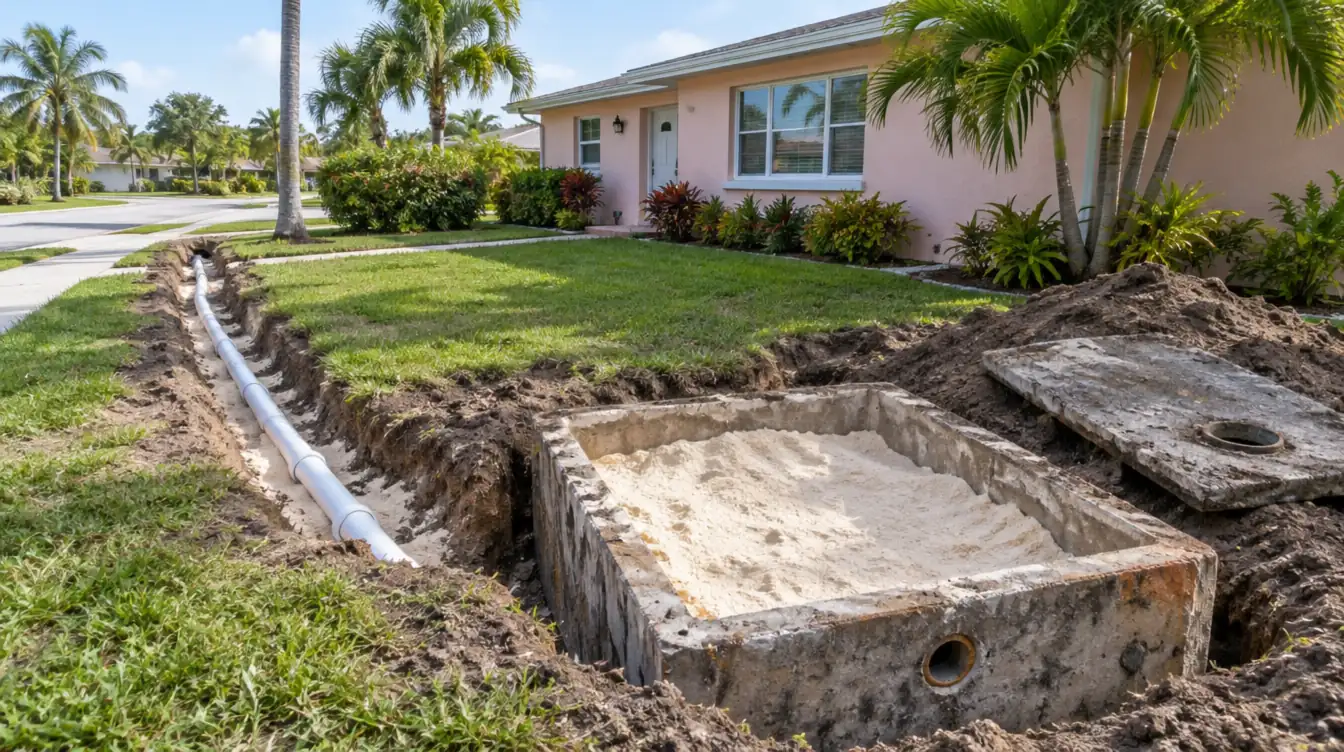
Septic-to-sewer conversion in Palmetto Bay depends on a public sewer line running past your property; most of the village is still on septic, with 6,158 parcels in the County's 2020 count. Where sewer is available, conversion means a new lateral, a plumbing permit, utility approval and abandoning the old tank under a Health Department permit.
The County's 2018 study expects the share of Palmetto Bay residential septic parcels with high peak groundwater to nearly double by 2030, and its policy is to prioritise sewer where septic systems are at risk. Until a line reaches your street, the practical step is keeping the existing system in good order, as the County's Connect 2 Protect programme advises.
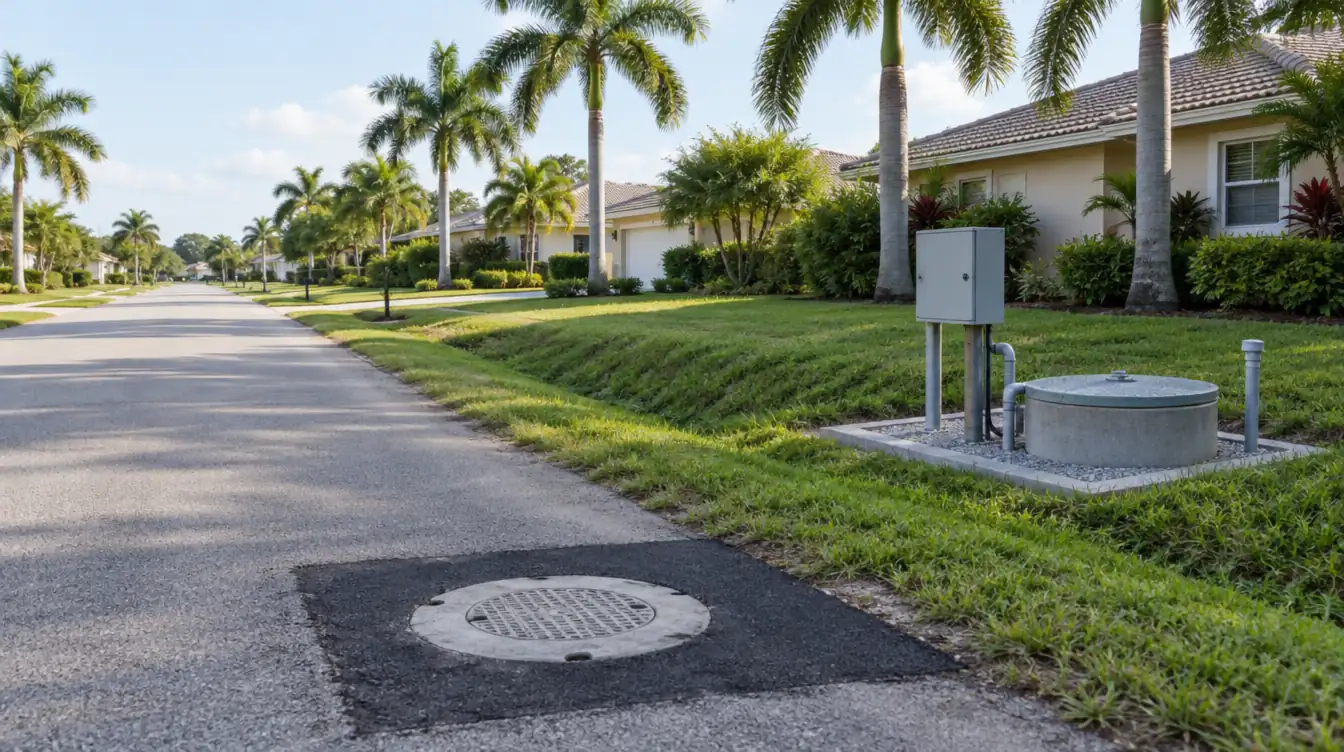
When sewer is available, homestead single-family owners may qualify for up to $15,000 in grants or low-interest loans through the County's Septic-to-Sewer Financial Assistance Program, which estimates a typical conversion at about $15,000. Required permits include a pump-out and abandonment permit from the Department of Health and a plumbing permit.
What the numbers say about Palmetto Bay
- The County's 2020 billing data counted 6,158 parcels with septic systems in Palmetto Bay, about 5% of the county total, against about 8,681 homes. (Miami-Dade WASD, 2020 data) (U.S. Census ACS 2020-2024)
- The County asks residents of municipalities such as Palmetto Bay to check sewer status with their local water and sewer department. (Miami-Dade WASD)
- In the County's 2018 groundwater study, 893 of Palmetto Bay's 5,757 modelled residential septic parcels (16%) already reached peak groundwater within 42 inches of the surface; the projection for 2030 was 1,753. (Miami-Dade, 2018)

How we handle sewer conversion in Palmetto Bay
- We confirm that a public gravity sewer abuts the property.
- We arrange the plumbing permit and the utility approval.
- The Department of Health issues a permit to pump out and abandon the tank.
- We lay the new lateral, connect, and abandon the tank.
A typical Florida conversion costs $5,000 to $20,000; Miami-Dade estimates about $15,000 for a homeowner. (Septic & Well Pro, 2026)
Septic-to-sewer conversion in Palmetto Bay: questions
Who do I ask about sewer in Palmetto Bay?
The County tells residents of municipalities to contact their local water and sewer department. Miami-Dade Water and Sewer can confirm whether a gravity sewer abuts your lot.
What happens to my old tank after I connect?
It is pumped out and abandoned under a Department of Health permit, usually by filling it with sand or removing it, so it cannot collapse or collect water later.
Sources
Last updated: October 28, 2026. Facts and figures on this page come from these sources, opened on October 28, 2026. Prices are typical published ranges, not a quote.
- Florida Septic to Sewer Conversion (2026), Septic & Well Pro (independent cost guide, updated 14 May 2026). Opened 28 Oct 2026.
- Septic-to-Sewer Financial Assistance Program, Miami-Dade Water and Sewer Department. Opened 28 Oct 2026.
- Section 381.00655, Florida Statutes (2026): Connection of existing onsite sewage treatment and disposal systems to central sewerage system, The Florida Legislature, Online Sunshine. Opened 28 Oct 2026.
- Resolution creating a Septic to Sewer Task Force, Agenda Item 11(A)(10), 8 July 2021 (Exhibit A, WASD charts), Miami-Dade County Board of County Commissioners. Opened 28 Oct 2026.
- Septic Systems Vulnerable to Sea Level Rise (final report, November 2018), Miami-Dade County RER, WASD and Florida Department of Health in Miami-Dade. Opened 28 Oct 2026.
- Palmetto Bay, FL: housing (ACS 2020-2024 5-year estimates), U.S. Census Bureau, American Community Survey (via Census Reporter). Opened 28 Oct 2026.
- Connect 2 Protect: Septic to Sewer, Miami-Dade Water and Sewer Department. Opened 28 Oct 2026.